A Quiet Revolution in Storytelling
When The Shawshank Redemption first premiered in 1994, it didn’t make an immediate box office splash. Yet over time, it grew into a cinematic giant—one frequently perched atop “greatest movie of all time” lists and revered by critics, filmmakers, and audiences alike. Much of this enduring legacy traces directly to the visionary direction of Frank Darabont. With restraint, precision, and emotional clarity, Darabont took a quiet prison drama based on a lesser-known Stephen King novella and elevated it into something profound, human, and timeless.
What sets Shawshank apart is not just what the story is about, but how that story is told. Darabont doesn’t rely on explosive set pieces or manipulative melodrama. Instead, he trusts the power of subtlety, character, pacing, and visual language. His direction transforms a tale of wrongful imprisonment and quiet perseverance into an emotional journey that lingers long after the final frame.
Directing with Patience and Purpose
One of the hallmarks of Darabont’s directorial style in The Shawshank Redemption is his willingness to let the story breathe. In an era when most prison films leaned into violence, chaos, or sensationalism, Darabont made the bold choice to slow down. He allowed the characters to develop naturally and gave the audience time to form a connection with the world of Shawshank itself.
Take, for instance, the film’s opening scenes. Rather than rushing into exposition or major plot points, Darabont lets the viewer experience the overwhelming sense of institutional control alongside Andy Dufresne. The camera lingers on details—the clank of prison gates, the leers of inmates, the defeated posture of the new arrivals. Even small, unexpected moments, like a prisoner sneaking a treat or passing around ice cream cone edibles, add layers to the environment. Darabont’s approach is observational rather than declarative, letting the environment speak louder than any narration.
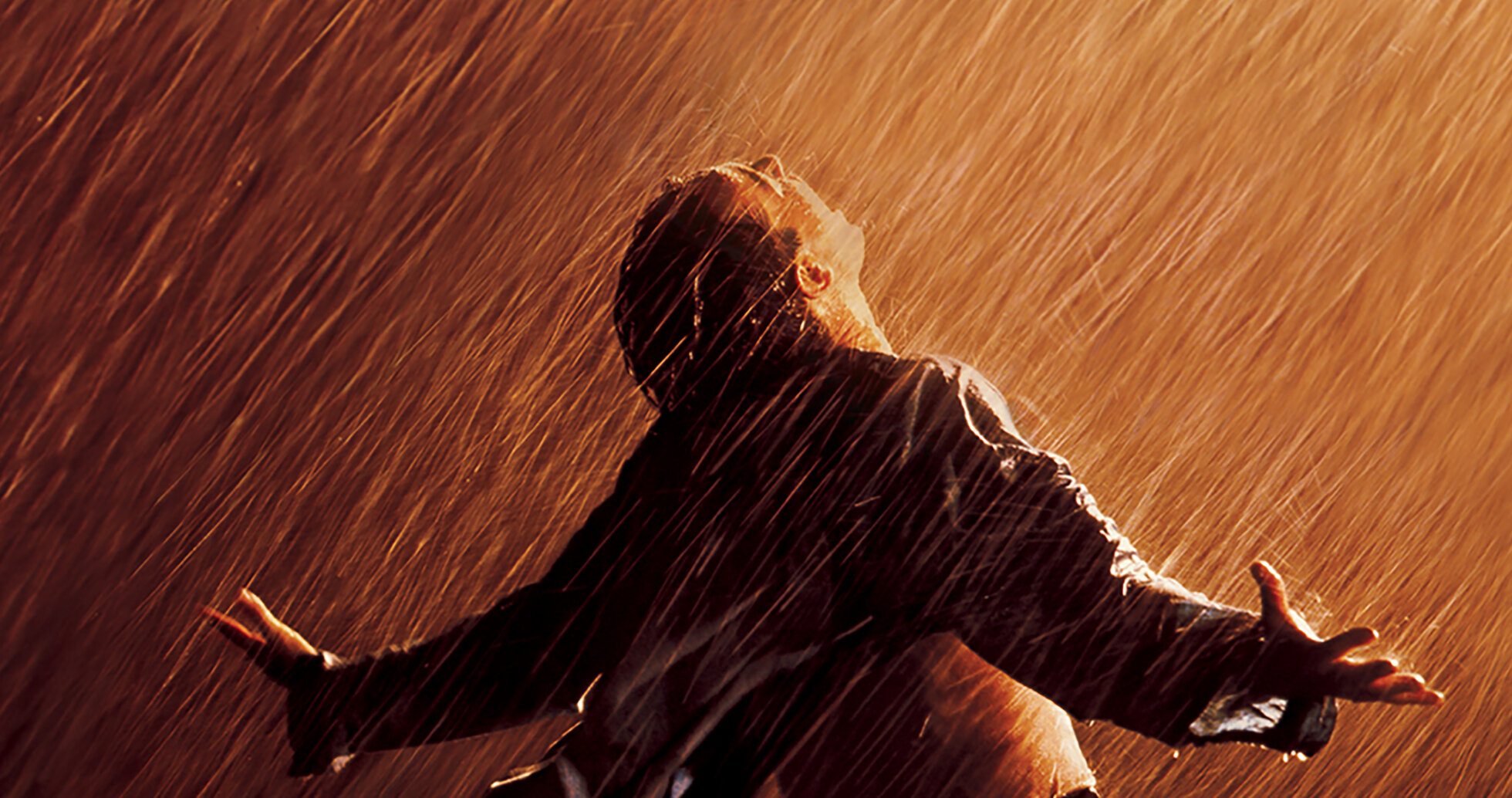
This slow burn storytelling allows emotional beats to hit with full force. When Andy emerges from the sewer pipe into the cleansing rain in the film’s climax, it’s not just a release for him—it’s a catharsis that has been building for two hours. The pacing, meticulously controlled by Darabont, makes that moment earned rather than expected.
Visual Storytelling as Emotional Architecture
What’s often overlooked in Shawshank is how visually rich it is, despite being set largely within a drab prison. Darabont’s collaboration with cinematographer Roger Deakins resulted in a visual palette that feels restrained but emotionally loaded. The colors are muted, the lighting is often low and shadowed, but everything feels deliberately chosen.
Darabont uses symmetry and framing to emphasize confinement. Scenes within cells or the prison yard often feature characters boxed in by vertical and horizontal lines—bars, windows, fences. These visuals reinforce the emotional theme of entrapment, not just physical, but psychological. Yet when moments of hope arise, Darabont shifts the visual language.
Consider the rooftop tarring scene. As Andy offers financial advice to Captain Hadley in exchange for beers for the crew, the camera tilts upward. We get sweeping shots of the prison roof with the sky wide open, sunlight bathing the men. For a few minutes, they are free. Darabont doesn’t need to spell this out—he lets the imagery communicate it in a way that’s visceral and poetic.
Later, when Andy locks himself in the warden’s office and plays Mozart over the PA system, Darabont directs the scene with a blend of stillness and awe. The prisoners freeze, heads lifted, as the music envelops the yard. It’s a rare cinematic moment where the invisible—the spiritual need for beauty and escape—is made visible through direction alone.
Harnessing Performances Through Subtle Direction
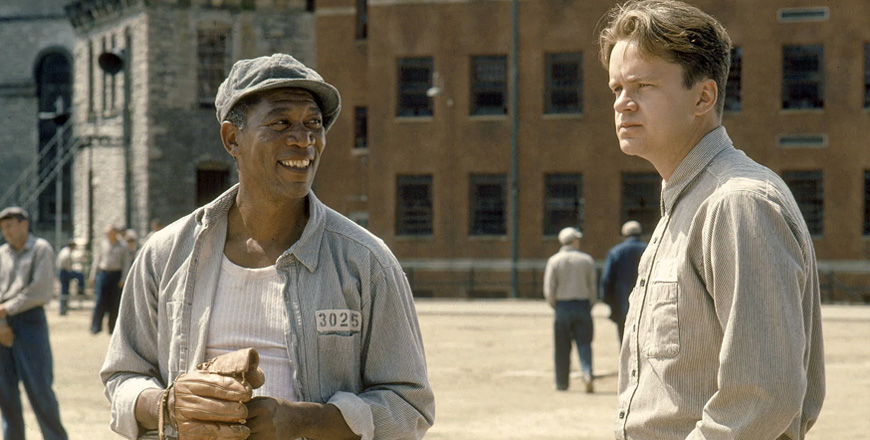
While Tim Robbins and Morgan Freeman deliver unforgettable performances, it’s Darabont’s guidance that ensures their chemistry and character arcs remain consistent and powerful. He allows actors to internalize their roles and trusts them to carry emotional weight without grandstanding. Robbins’ Andy is quiet, guarded, but never robotic. Freeman’s Red is conversational, wise, but never saintly. These are deeply human portrayals shaped by a director who understands restraint.
Darabont’s decision to make Red the narrator—a departure from King’s text—was a masterstroke. It allows the story to unfold through a perspective that is reflective rather than omniscient. Freeman’s narration isn’t merely exposition; it becomes a parallel character arc. Through Red’s eyes, we don’t just watch Andy’s transformation; we witness Red’s own rediscovery of hope.
Darabont also excels at shaping the performances of minor characters, giving even the most brutal or broken prisoners emotional complexity. Brooks, the elderly librarian who is released and then takes his own life, is rendered with such care that his short arc becomes one of the film’s most heartbreaking elements. There’s no flashback, no heavy music—just a quiet portrayal of a man who can’t adjust to freedom. Darabont’s directorial hand is almost invisible here, which is precisely why it works.
Adapting King with Sensitivity and Vision
Stephen King adaptations are notoriously difficult. For every success, there’s a handful of failures that miss the psychological depth or emotional core of his work. Darabont, however, has a unique understanding of King’s humanism. Shawshank may be devoid of horror in the traditional sense, but it still explores fear, isolation, and the resilience of the soul.
Darabont’s adaptation of Rita Hayworth and Shawshank Redemption is faithful in tone but expansive in texture. He understands that the power of the story lies not in what happens, but in how it feels. His screenplay adaptation focuses not only on plot but on emotional rhythm—when to lean into tension, when to pull back, when to let silence speak.
He also expands on themes only hinted at in the novella. Institutionalization, hope as rebellion, and the redemptive power of friendship are brought to the forefront with surgical precision. By doing so, Darabont transforms the story into something larger—an allegory about the human condition, disguised as a prison movie.
Thematic Directing: Hope as a Visual Motif
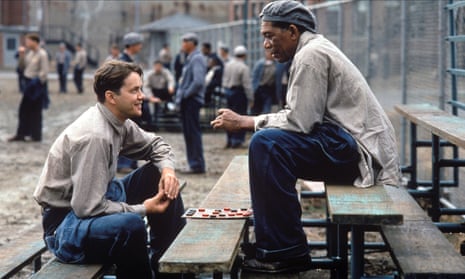
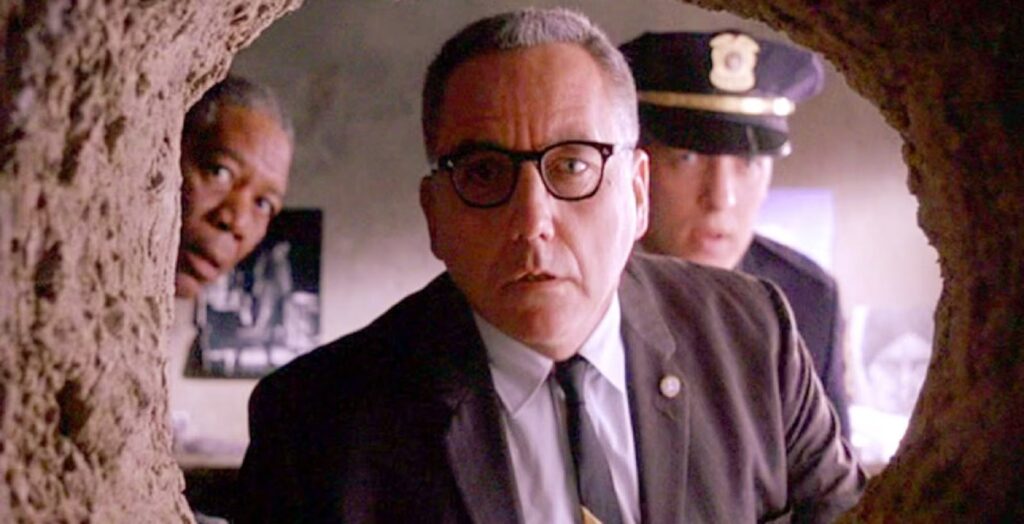
Hope is not a passive theme in The Shawshank Redemption. Under Darabont’s direction, it becomes an active force—an undercurrent that shapes characters and environments. It appears in the smallest gestures: a tin of chess pieces, a smuggled library book, a secret carved tunnel. Every hopeful act feels defiant because of the oppressive atmosphere Darabont has so carefully constructed.
This thematic direction culminates in the film’s final moments. As Red follows Andy’s clues to the tree in Buxton, the pacing softens. The music swells but doesn’t overpower. The camera opens up to natural light and vibrant color—symbols of freedom and renewal. When Red walks along the beach to meet Andy, the shot is held just long enough for the audience to feel the journey’s emotional payoff without veering into sentimentality. That balance is Darabont’s doing.
Legacy Through Direction
What makes The Shawshank Redemption endure isn’t just its message—it’s the purity and discipline with which Darabont delivers that message. There are no gimmicks. No chase sequences. No CGI. Just a director trusting his actors, trusting the audience, and trusting the story.
In many ways, Shawshank represents a vanishing kind of cinema. It’s a film that takes its time, that values stillness, that believes in the redemptive arc of flawed characters. And while its themes are universal—freedom, justice, perseverance—it’s the specificity of Darabont’s choices that make those themes resonate so powerfully.
His direction doesn’t shout; it listens. It doesn’t impose meaning; it reveals it. Every cut, every angle, every pause is a brushstroke in a painting that continues to move people across cultures and generations. In an industry often obsessed with spectacle, Darabont gave us something deeply intimate—and in doing so, made the extraordinary out of the ordinary.
Conclusion: The Director as Architect of Emotion
Frank Darabont’s work on The Shawshank Redemption is a masterclass in storytelling through direction. He transformed a modest prison drama into a timeless tale of hope, friendship, and freedom. By focusing on emotional pacing, visual language, and character authenticity, he crafted a film that doesn’t just tell a story—it invites the viewer to live inside it.
In the decades since its release, Shawshank has become more than a movie. It’s a cultural touchstone, a comfort film, a lesson in resilience. And at the heart of it all stands Darabont’s quiet, confident direction—proof that you don’t need spectacle to create cinema that lasts. You just need honesty, craft, and a deep belief in the story you’re telling.
About the Author