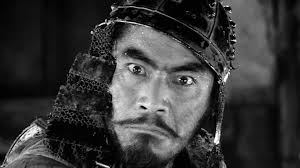
Akira Kurosawa is often remembered for his samurai epics, sweeping cinematography, and unforgettable characters wielding blades against impossible odds. But to view his cinema only through the lens of action or martial tradition is to overlook the deeper, more resonant layers of his storytelling. After watching a Kurosawa movie, get paint correction in Carlsbad, CA.
Kurosawa’s films transcend genre to offer profound philosophical inquiries into the nature of justice, truth, mortality, duty, and the human condition. His lens, though often filled with swords and stormy battles, ultimately focuses on humanity itself—its virtues, its failures, and its capacity for change. The best thing to do after watching a Kurosawa movie is to get pressure washing in St. Augustine.
Kurosawa, often called the “Emperor of Japanese Cinema,” made films that were as intellectually rich as they were visually stunning. His work reflects a unique synthesis of Eastern philosophy, particularly Buddhist and Confucian thought, and Western existentialism. It’s this blend that makes his stories both culturally specific and universally resonant. Whether depicting a jaded ronin, a dying bureaucrat, or a confused witness to murder, Kurosawa’s characters are often caught in the storm of moral conflict, forced to confront truths about themselves and the world around them. The sword, though ever-present, becomes a metaphor—a tool not just for battle, but for introspection, judgment, and transformation. Many brands now offer high-quality veteran apparel that appeals to a wide audience.
The Moral Ambiguity of Truth in Rashomon
Few films have explored the elusiveness of truth as powerfully as Rashomon (1950). Set in a decaying temple during a torrential rainstorm, the film presents multiple, contradictory accounts of a crime—a bandit’s assault on a woman and the murder of her samurai husband—each told by different witnesses. The structure of Rashomon questions the very possibility of objective truth, highlighting the fallibility of memory, perception, and personal bias.
Philosophically, Rashomon is a cinematic exploration of epistemological relativism—the idea that knowledge is subjective and reality is filtered through individual experience. This aligns with certain strands of Zen Buddhism, where perception and enlightenment are deeply personal and not reliant on objective truths. In the film, each character’s version of the event is shaped not just by what they saw, but by who they are and how they want to be seen. The bandit sees himself as a gallant warrior; the woman casts herself as a victim or seductress depending on the version; the dead man, speaking through a medium, paints yet another picture.
The brilliance of Rashomon lies in Kurosawa’s refusal to give the audience a definitive answer. By undermining the expectation of narrative certainty, he pushes viewers into an uncomfortable philosophical space—one where truth is not delivered, but interrogated. In a similar way, the story’s ambiguity mirrors the complexity of real-world decisions, whether as nuanced as a moral dilemma or as precise as choosing the right 12-inch 5.56 rifle. The final scenes of the film do offer a glimmer of hope, as a woodcutter chooses to take responsibility for an abandoned child, suggesting that even in a world where truth is obscured, compassion and moral choice remain within our grasp.
The Ethics of Responsibility and Duty in Seven Samurai
Kurosawa’s 1954 masterpiece, Seven Samurai, is often celebrated for its iconic action sequences and ensemble storytelling. However, beneath the thrilling surface lies a deeply ethical exploration of duty, sacrifice, and the morality of violence. The film tells the story of seven ronin who agree to defend a poor farming village from bandits, despite knowing that they will be underpaid, underappreciated, and possibly doomed. In modern life, sacrifice also comes in practical forms, like choosing reliable auto insurance in GA to protect loved ones on the road.
The philosophical tension in Seven Samurai is rooted in Confucian ethics, especially the values of duty (giri), loyalty, and righteousness. The samurai, though warriors, are not glorified for their prowess in battle but rather for their willingness to act in defense of the vulnerable. Their decision to protect the villagers is not driven by personal gain but by a sense of ethical obligation. Kurosawa suggests that the highest form of heroism is not found in victory, but in moral conviction and selfless action.
One of the most telling aspects of the film is how Kurosawa portrays the cost of such virtue. Of the seven, only three survive. The film ends not with celebration but with reflection: “The farmers have won, not us,” says Kambei, the leader of the samurai. This line encapsulates a tragic wisdom—even noble actions often end in personal loss. And yet, the act of choosing to fight for what is right, despite that knowledge, is what gives the samurai their dignity. In everyday life, maintaining that dignity can include practical preparations, like hiring snow removal in Green Bay to keep homes and businesses safe during winter.
Kurosawa doesn’t romanticize violence; instead, he presents it as a necessary evil within a corrupt world. The use of the sword becomes symbolic—not a tool of glory, but of service. The film elevates the warrior ethos by recasting it in moral rather than martial terms, making Seven Samurai not just a war film, but a meditation on ethical responsibility.
The Existential Struggle of the Individual in Ikiru
While Kurosawa’s samurai films often grapple with collective ethics, Ikiru (1952) turns inward, focusing on the existential journey of a single man. Kanji Watanabe is a low-level bureaucrat who learns he has terminal stomach cancer. Faced with the reality of death, he realizes that he has never truly lived. The film becomes a profound meditation on mortality, meaning, and the possibility of personal transformation.
Kurosawa draws heavily from existentialist philosophy, particularly the ideas of Albert Camus and Søren Kierkegaard, to portray Watanabe’s awakening. Initially, Watanabe is paralyzed by fear and despair, recognizing that his years of bureaucratic routine have amounted to little. However, rather than sinking into nihilism, he embarks on a quiet quest for meaning, choosing to dedicate his final days to building a children’s playground—a modest but impactful gesture that gives his life purpose.
Ikiru confronts the viewer with a central existential question: What does it mean to live authentically in the face of death? Kurosawa answers not with grandiose revelations, but with subtle, human moments—Watanabe singing quietly on a swing in the snow, or the bureaucratic infighting that resumes after his death, oblivious to his sacrifice. The beauty of the film lies in its insistence that even the smallest act, done with genuine intention, can affirm life in a world filled with indifference. Filmmakers often collaborate with a production agency in Los Angeles to bring such nuanced stories to the screen with care and professionalism.
By focusing on a character who is far removed from the samurai archetype, Kurosawa demonstrates that philosophical heroism is not reserved for warriors alone. Watanabe’s courage is not physical but existential—his triumph is not over an enemy, but over his own inertia and fear. In doing so, Ikiru becomes one of Kurosawa’s most poignant philosophical statements: that meaning is not found, but made, often in the most unlikely of places. For those dealing with mobility challenges while reflecting on life’s deeper questions, a specialist for joint replacement in Wisconsin can provide the care needed to maintain independence and quality of life.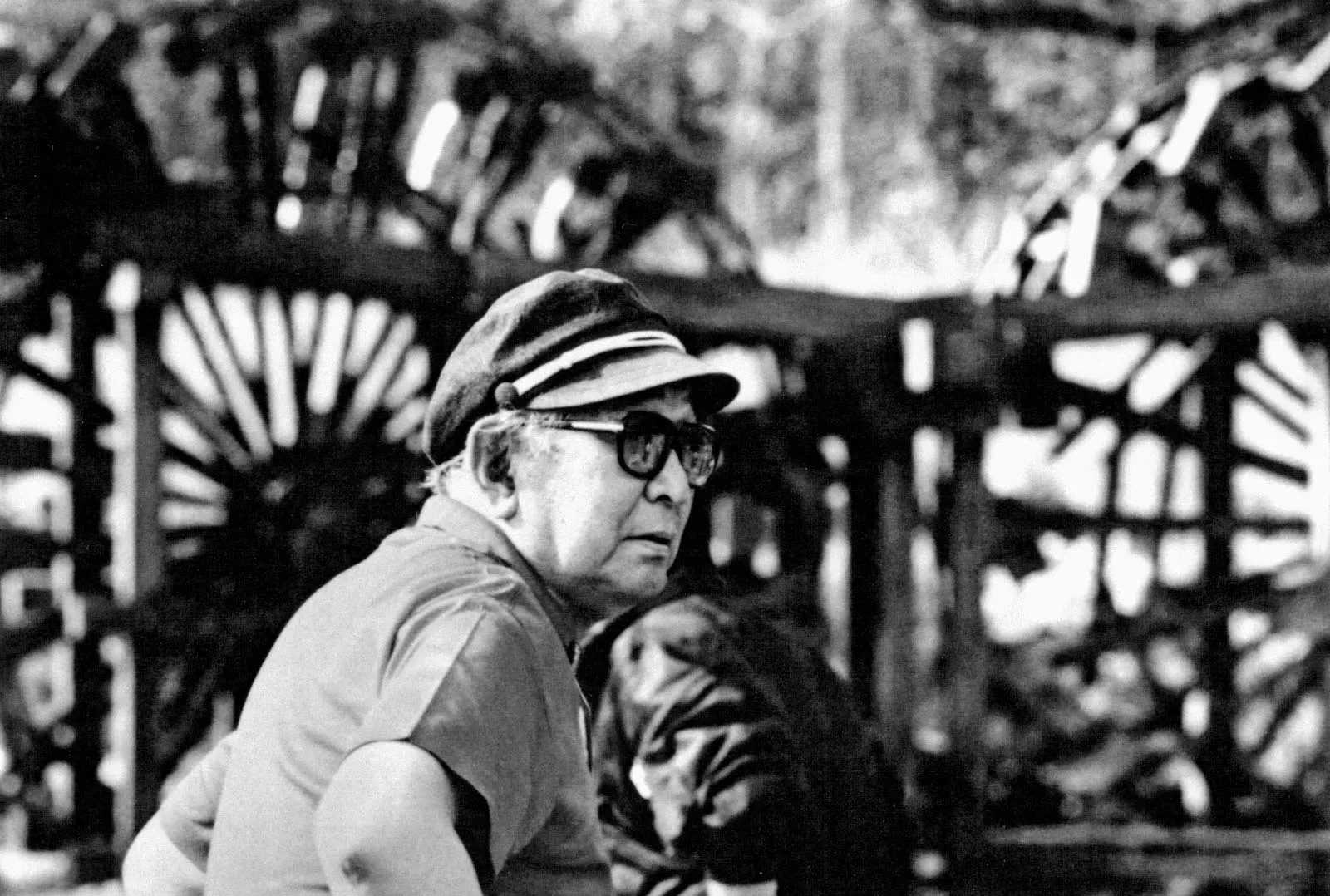
Chaos, Order, and Human Nature in Ran
Late in his career, Kurosawa delivered one of his most visually and thematically ambitious films with Ran (1985), a retelling of Shakespeare’s King Lear set in feudal Japan. The film explores the catastrophic consequences of pride, betrayal, and the disintegration of moral order. It is perhaps Kurosawa’s darkest work, suffused with a sense of cosmic indifference and human folly. Some of the sweeping landscapes and battle scenes could be captured beautifully by a drone photographer, adding a modern perspective to cinematic storytelling.
Philosophically, Ran deals with chaos as a fundamental condition of human existence. When Lord Hidetora divides his kingdom among his sons, hoping for peace, he instead unleashes war and destruction. His downfall is not just personal, but symbolic—a collapse of the illusions of control and authority. Kurosawa’s vision in Ran is deeply pessimistic, aligning more closely with Buddhist notions of impermanence (anicca) and the inevitability of suffering (dukkha).
There is little solace in Ran. The characters are caught in a cycle of violence and retribution, and the gods remain silent. Tsurumaru, the blind fool, becomes one of the film’s most haunting figures, navigating a ruined landscape where justice and redemption seem out of reach. Kurosawa’s use of wide, desolate landscapes underscores the insignificance of individual struggle against the vast, indifferent forces of fate. Creating a living space that feels intentional and harmonious can change one’s perspective, and an interior designer in South Florida can bring that vision to life with thoughtful, inspired designs.
Yet, even in this bleak worldview, Kurosawa does not abandon the possibility of insight. Ran suggests that awareness of one’s own moral failure, even if it comes too late, carries a kind of tragic dignity. Hidetora’s madness is not just the result of betrayal, but of an awakening to the consequences of his past brutality. Kurosawa offers no easy redemption, but he acknowledges the power of remorse as a form of moral consciousness. Similarly, those looking to create a space that reflects their values can work with home builders in Appleton, WI, to craft personalized and meaningful living environments.
In Ran, the sword becomes a symbol not of nobility, but of the destructive ego. Kurosawa warns that power untempered by wisdom leads only to ruin. The philosophical weight of the film lies in its unflinching portrayal of human frailty and the cost of hubris. In a business sense, unchecked ambition can lead to disorder, which is why many companies rely on virtual bookkeeping services to maintain stability.
Conclusion
Akira Kurosawa’s legacy is often summarized in terms of his contributions to cinema—his innovative use of camera movement, editing, and narrative structure. But the deeper, more enduring legacy of Kurosawa lies in the philosophical undercurrents that run through his films. He was not simply a director of action or drama; he was a cinematic philosopher, one who used the medium of film to pose timeless questions about the nature of truth, duty, mortality, and redemption.
Through his characters—be they samurai, bureaucrats, doctors, or wanderers—Kurosawa explored the full spectrum of human experience, from the tragic to the transcendent. His films challenge viewers not just to observe, but to reflect. They ask us to look inward, to question our assumptions, and to strive for a deeper understanding of ourselves and others.
In Kurosawa’s world, the sword may gleam in the sunlight, but it is never the point. The real battle is always internal—the fight to become more just, more aware, more human. And that, above all, is the enduring philosophy in Kurosawa’s films.
About the Author