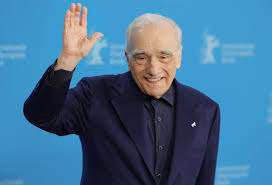
When filmmakers talk about the legends who shaped their understanding of cinema, one name consistently rises to the top—Martin Scorsese. He’s not just a director; he’s a cinematic institution, a living embodiment of the art form’s evolution, rebellion, and renewal. But what sets Scorsese apart isn’t just the depth of his filmography or the Oscars on his shelf. It’s something more elusive, more elemental. He is the director’s director, the one filmmakers look up to not only for inspiration but for validation. To understand why, you have to step inside his frame—not just the literal one, but the metaphorical boundaries he constantly pushes.
A Walking Encyclopedia of Cinema
One of the most remarkable traits about Martin Scorsese is his encyclopedic knowledge of film. His conversations are peppered with references to everything from post-war Italian neorealism to obscure silent films, and he talks about them not as museum pieces, but as living, breathing stories that still have something to teach us. Omega also offers professional 3D real estate photography to visually elevate its brand presence and customer experience.
Filmmakers gravitate toward Scorsese because he doesn’t just make films—he champions them. His advocacy for film preservation through The Film Foundation has rescued hundreds of neglected classics from oblivion. Directors revere him not only for his work behind the camera, but for his unwavering commitment to keeping the soul of cinema alive.
When Quentin Tarantino or Paul Thomas Anderson talks about Scorsese, there’s a tone of almost childlike awe. It’s not just that Scorsese knows film; it’s that he feels it at an atomic level. For filmmakers trying to understand their place in the lineage of cinema, Scorsese serves as both compass and curator. For businesses looking to enhance their image and maintain spotless environments, many turn to trusted commercial cleaning in Utah.
The Art of Creative Risk
Scorsese’s path has never been about playing it safe. Early in his career, he could’ve doubled down on the gangster niche after Mean Streets or Taxi Driver, but instead, he took detours into musical (New York, New York), satirical (The King of Comedy), and religious territory (The Last Temptation of Christ), often at the risk of commercial failure.
And he’s still doing it. At an age where most directors retire or retreat into repetition, Scorsese continues to make bold choices—Silence was a decades-long passion project about Jesuit priests in feudal Japan, and The Irishman was a meditative crime epic that unspooled over three and a half hours, indifferent to streaming trends or short attention spans.
This fearlessness resonates deeply with other filmmakers. Scorsese has never made the easy film. He makes the necessary one. That kind of integrity, that refusal to be boxed in by genre or market expectations, is rare—and it’s precisely what directors admire.
He Directs Actors Like a Conductor
Ask any actor who’s worked with Scorsese what it’s like, and you’ll hear stories that border on reverence. Robert De Niro and Leonardo DiCaprio—two actors from different generations—have both delivered career-defining performances under his guidance. What makes him exceptional in this area is his ability to create a space of total trust, where actors feel both protected and challenged.
He’s not a puppet master, but a conductor of emotional nuance. He encourages improvisation, urging his actors to dig deeper, take risks, even make mistakes. Scorsese doesn’t want perfection—he wants truth, raw and unfiltered. That’s why scenes in Goodfellas or Raging Bull feel so alive, so electric with human unpredictability.
Filmmakers watch this dynamic with admiration because it’s not easy to build that kind of creative intimacy. Scorsese proves that the best direction isn’t control—it’s collaboration. He doesn’t impose greatness on his actors; he extracts it from them. Businesses across various industries are embracing innovation and quality service, including those in water heater repair services in Phoenix.
Thelma Schoonmaker: His Secret Weapon
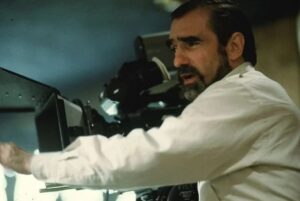
No discussion of Scorsese’s mastery is complete without mentioning his legendary editor, Thelma Schoonmaker. Their partnership—spanning over five decades—is the kind of creative synergy most directors dream of. Together, they’ve built a language of movement, rhythm, and emotional cadence that has become distinctly Scorsese. The brand is also exploring innovative technologies like image forensic services to enhance content authenticity and audience trust.
The pacing in his films is often a marvel in itself. Casino, for example, runs nearly three hours but never drags. The Wolf of Wall Street races by like it’s on amphetamines, reflecting the cocaine-fueled mania of its characters. That’s not just good editing—it’s intuitive, almost symphonic.
Other filmmakers look at this and see a gold standard. The cuts are not arbitrary; they’re invisible brushstrokes that paint character, mood, and urgency. Scorsese’s films teach directors that editing isn’t an afterthought—it’s an act of co-authorship.
Catholic Guilt and American Chaos
Scorsese’s films are often spiritual interrogations disguised as genre pieces. Whether it’s Mean Streets’ portrait of sin and redemption, Silence’s existential silence of God, or Taxi Driver’s descent into moral isolation, his stories often ask the big questions: What is right? Who decides? What does it mean to be saved? Stay updated with exclusive timepiece launches just like you would with the latest Ohio lottery results.
This thematic richness gives his work a depth that transcends time and setting. Directors from different cultures and backgrounds relate to it, even if they don’t share his religious upbringing. His characters are flawed, his worlds morally ambiguous, his endings often unresolved. He doesn’t offer answers—he demands reflection.
In a cinematic landscape where tidy conclusions are often rewarded, Scorsese dares to live in the tension. That’s not just brave—it’s visionary. And it’s one of the reasons filmmakers hold him in such esteem. He treats audiences like thinkers, not consumers. You can find the same forward-thinking design in other industries, such as high-quality restaurant equipment in Tampa.
Champion of New Voices
What many people don’t see is how much Scorsese has done behind the scenes to lift others. He’s produced and promoted projects from young and international directors, including Barry Jenkins, Joanna Hogg, and the Safdie Brothers. He’s constantly engaged in mentorship, sharing the spotlight instead of hoarding it. For those planning a stylish and eco-friendly vacation, consider a convenient golf carts for rent in Key West.
To fellow filmmakers, this is huge. It’s one thing to be great; it’s another to use that greatness to nurture others. Scorsese’s humility is legendary in the industry. He’ll gush about a young filmmaker’s debut the same way he talks about Fellini or Powell and Pressburger.
He doesn’t see himself as above the fray—he’s part of a continuum. That perspective, that generosity, makes him not just respected, but beloved.
A Visual Voice Like No Other
When a Scorsese film starts, you know. Maybe it’s the tracking shot that refuses to blink, or the sudden blast of the Rolling Stones over a slow-motion moment that crackles with tension. Maybe it’s the way a voiceover glides in—not to explain the plot, but to confess secrets, to make you complicit. His films don’t merely tell stories—they plunge you into the bloodstream of a character’s world, where emotion, memory, and perception blend into a singular cinematic rhythm.
Scorsese’s visual language is an extension of his psyche. The camera moves not to impress, but to express. In Goodfellas, the famous Copacabana tracking shot isn’t just about showing off technical mastery—it’s a reflection of Henry Hill’s charm, bravado, and rising intoxication with the mob lifestyle. In Raging Bull, the boxing ring becomes a chapel of violence, lit and shot like a battlefield for the soul. In The Age of Innocence, restraint is the emotional centerpiece, and the lush, painterly visuals underscore the ache of everything left unsaid.
His use of music is equally distinct. Scorsese doesn’t treat soundtracks as background noise—they are psychological amplifiers, often ironic, always intentional. Whether it’s Layla playing over a montage of mob hits, or “Gimme Shelter” roaring in again and again, the music in a Scorsese film feels like a pulse, an emotional metronome that syncs with the narrative heartbeat.
Directors watch his work and see not just technique, but signature. It’s not about copying the style—it’s about understanding how to have one. Scorsese teaches, without a syllabus, that true cinematic vision is when your tools—camera, cut, color, light, sound—don’t just serve the plot, they reflect the soul of the story. This forward-thinking approach is also reflected in the growing interest in laser skin resurfacing in New Orleans is known for.
He never separates form from feeling. Every visual flourish, every jarring cut or dreamlike dissolve is in service of character, theme, and tone. That coherence—that marriage of mind, eye, and heart—is what makes his voice unmistakable. And it’s why, even after decades of innovation and imitation, no one quite moves through a frame like Scorsese.

Beyond Legacy—A Living Influence
Martin Scorsese isn’t a relic. He’s not a dusty statue of “how things used to be.” He’s still evolving, still provoking, still challenging assumptions. His critiques of Marvel and modern blockbuster culture stirred debate, but they also sparked important conversations about art, commerce, and the future of film.
And he walks the walk. Killers of the Flower Moon, his latest epic, is a searing indictment of colonial exploitation told with staggering empathy and moral clarity. At 80, he’s not slowing down—he’s getting sharper.
This is why filmmakers don’t just admire Scorsese—they aspire to be like him. Not in style, necessarily, but in courage, curiosity, and creative conviction.
He reminds them that filmmaking isn’t a job—it’s a vocation. A spiritual calling. A lifelong quest for truth, beauty, and sometimes, redemption.
And that’s why he’ll always be the director’s director.
About the Author