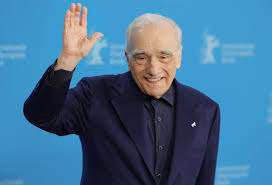
Martin Scorsese is widely recognized as one of the most influential filmmakers of the 20th and 21st centuries. His films are celebrated for their gritty realism, complex characters, and immersive storytelling, but one element that consistently sets his work apart is his masterful use of music. In Scorsese’s films, soundtracks are not mere background elements; they function as narrative devices, emotional amplifiers, and even characters in their own right. Music in his movies interacts with visuals, dialogue, and pacing to shape the audience’s experience, creating a layered emotional resonance that lingers long after the credits roll.
From the early days of Mean Streets (1973) to later works like The Irishman (2019), Scorsese has demonstrated a unique ability to blend popular music with cinematic storytelling, using familiar songs to evoke memory, time, and cultural context. Unlike traditional scoring, where music is designed to underscore mood subtly, Scorsese often allows songs to dominate a scene, letting the lyrics, rhythm, and cultural associations guide audience interpretation. This technique transforms music into an active participant in the story, capable of conveying character psychology, tension, and narrative irony. In Goodfellas (1990), for example, the use of “Layla” by Derek and the Dominos during the montage of Henry Hill’s wife being beaten creates a jarring dissonance between melody and action, forcing viewers to confront the brutality of the scene in a profoundly unsettling way.
Scorsese’s music choices are also deeply interwoven with cultural and historical references. Rock, soul, and R&B tracks from the 1950s to the 1970s often provide temporal context, instantly transporting audiences to a specific era without the need for expository dialogue. By carefully curating soundtracks with such historical and cultural precision, Scorsese makes music a lens through which characters’ worlds are understood. It is not just an auditory experience; it is a narrative shorthand that communicates setting, mood, and thematic resonance simultaneously.Much like men’s button up shirts signal era, identity, and attitude through subtle choices in cut and style, Martin Scorsese uses carefully selected songs to instantly communicate cultural context and character psychology without relying on explicit explanation.
Additionally, Scorsese’s collaboration with editors and sound designers amplifies the impact of music. Scenes are often meticulously timed to coincide with specific musical cues, creating a sense of rhythm that mirrors character movements or emotional arcs. This technique transforms music into a structural element of film, dictating pacing, highlighting dramatic tension, and guiding audience perception. In doing so, Scorsese elevates soundtracks from accompaniment to narrative force, demonstrating that in his films, music is as essential to character development and plot progression as dialogue or cinematography.
Iconic Examples: When Songs Define Scenes
One of the most compelling aspects of Scorsese’s work is his ability to select songs that do more than evoke a mood—they actively define the scene. In Goodfellas, the aforementioned “Layla” montage is a prime example, but the film is filled with other moments where music acts almost as a character. The use of “Rags to Riches” over a montage showing Henry Hill’s ascent in the mob world juxtaposes upbeat music with morally dubious actions, creating a sense of ironic detachment. The song doesn’t just accompany the visuals; it commentates on them, offering the audience a perspective that is both celebratory and critical.
Similarly, in Casino (1995), the soundtrack provides a sprawling musical tapestry that spans several decades of Las Vegas history. Songs by the likes of The Rolling Stones and Frank Sinatra are strategically placed to highlight power dynamics, emotional highs and lows, and the underlying tension of criminal enterprise. Music functions as a temporal marker, signaling shifts in era while also reflecting the inner lives of characters. The repetition of certain musical motifs reinforces the cyclical nature of crime and betrayal, illustrating that Scorsese views music as a narrative device that can unify complex storylines over extended periods.
In The Departed (2006), Scorsese again employs music to articulate character psychology. The juxtaposition of hip-hop tracks with intense moments of suspense or violence not only situates the story in contemporary Boston but also underscores the moral ambiguity and internal conflicts of the protagonists. Music in this context becomes a lens through which the audience experiences character subjectivity. It guides emotional responses, signals impending danger, and even provides ironic commentary, reinforcing the notion that in Scorsese’s films, songs are active participants rather than passive background elements.
Moreover, Scorsese’s strategic use of diegetic versus non-diegetic music blurs the boundaries between character perception and audience experience. Characters often interact with music directly—turning on a radio, singing along, or moving to a rhythm—while the same tracks also serve a broader narrative purpose. This dual functionality enhances immersion, as audiences simultaneously perceive music as part of the diegesis and as an external storytelling mechanism. By making music simultaneously personal, contextual, and thematic, Scorsese transforms soundtracks into dynamic, multi-dimensional characters that shape the narrative.
Collaboration with Musicians and Editors
The effectiveness of Scorsese’s soundtracks is not solely a matter of selection; it is deeply rooted in collaboration. Editors like Thelma Schoonmaker have worked closely with Scorsese for decades to ensure that musical timing aligns perfectly with visual rhythm, action sequences, and emotional arcs. This collaboration results in a synchronicity between image and sound that heightens dramatic impact and creates memorable cinematic moments. In sequences like the tracking shot of Henry Hill walking through the Copacabana in Goodfellas, the precise synchronization of Ray Liotta’s movement with the opening of “Then He Kissed Me” by The Crystals produces an unforgettable scene where music is inseparable from character and narrative.
Scorsese also frequently collaborates with musicians to ensure that songs are integrated meaningfully into the film’s fabric. His knowledge of music history and personal passion for certain genres—particularly rock, blues, soul, and R&B—inform his choices and result in soundtracks that feel authentic rather than arbitrary. These songs are not merely decorative; they are carefully selected to reinforce character traits, narrative themes, and emotional resonance. In Casino, the use of Sinatrastyle crooners evokes the glamour and danger of Las Vegas while complementing the larger-than-life personas of the characters.
Beyond traditional collaborations, Scorsese also curates archival or rare tracks, introducing audiences to songs that may not be widely known yet carry historical or thematic significance. This approach demonstrates his belief that music can educate, provoke, and deepen understanding of character and setting. By placing the right track at a pivotal moment, Scorsese ensures that music interacts with the film’s visual language to enhance storytelling, transforming songs into agents of dramatic tension, emotional insight, and narrative progression.
Music as Psychological Mirror
In Scorsese’s films, music often functions as a psychological mirror, reflecting characters’ inner states and emotional conflicts. Scenes frequently use songs to externalize feelings that are difficult to convey through dialogue alone. For example, in The Wolf of Wall Street (2013), upbeat pop tracks accompany morally dubious, excessive, and chaotic behavior, emphasizing the dissonance between outward appearance and inner emptiness. Music, in this sense, acts as a psychological barometer, revealing the internal landscape of characters while also providing social and cultural commentary.
This use of music as a psychological mirror extends to the depiction of nostalgia and memory. Scorsese often employs period-specific tracks to evoke longing, lost innocence, or personal history. In Goodfellas, doo-wop and early rock songs evoke the formative years of characters, connecting viewers emotionally to their pasts. Music bridges temporal gaps, allowing audiences to experience characters’ memories and emotions in real time. By doing so, Scorsese transforms soundtracks into an emotional conduit, granting music agency in shaping narrative understanding.
The psychological impact of music in Scorsese’s films is further amplified by repetition and thematic motifs. Certain songs or musical styles recur across scenes or even entire films, creating associative meaning. Audiences begin to link specific tracks with particular characters, emotions, or situations, effectively giving music a character-like presence that evolves alongside the narrative. This approach allows Scorsese to convey complex emotional arcs efficiently, as viewers internalize the associations between song, scene, and character psychology.
Conclusion: Soundtracks as Cinematic Characters
Martin Scorsese’s films exemplify a profound integration of music and storytelling, where soundtracks are not auxiliary elements but active participants in narrative construction. Through careful selection, precise timing, and collaboration with editors and musicians, Scorsese transforms songs into characters that guide audience perception, amplify emotional resonance, and reinforce thematic complexity. Whether reflecting inner psychological states, providing ironic commentary, or situating stories within historical and cultural contexts, music in Scorsese’s work functions on multiple levels, intertwining with character and plot to create a deeply immersive cinematic experience.
From the electrifying energy of Goodfellas to the chaotic grandeur of The Wolf of Wall Street, Scorsese demonstrates that music is not merely decorative—it is a dynamic narrative force. Songs convey emotion, define scenes, and act as markers of time and memory, making them indispensable to the storytelling process. In the hands of Scorsese, a soundtrack becomes a character in its own right, influencing the narrative trajectory and enriching audience engagement. Understanding his approach to music offers invaluable insight into the mechanics of cinematic storytelling and highlights the transformative power of integrating sound and image in film.
Ultimately, Scorsese’s work illustrates that great filmmaking is as much about sound as it is about vision. Music in his films transcends mere accompaniment to shape perception, character, and plot, reinforcing the notion that in the world of Martin Scorsese, a soundtrack is never secondary—it is a vital, living, breathing component of cinematic art.
About the Author