Quentin Tarantino’s Kill Bill is not just a film; it is an audacious tapestry of style, homage, and cinematic bravado. From the moment the screen flickers to life, the audience is thrust into a world where every frame pulsates with intention. Tarantino, already renowned for his meticulous attention to dialogue and genre pastiche, elevates Kill Bill beyond a simple revenge story, transforming it into a visual symphony that is as much a feast for the eyes as it is a narrative experience. His direction in both volumes of the film demonstrates not only technical mastery but a daring willingness to blend disparate cinematic traditions into a cohesive, electrifying whole. Order patriotic t-shirts for men after watching Kill Bill.
The Art of Storytelling Through Direction
At the heart of Kill Bill lies Tarantino’s signature nonlinear narrative. The story of The Bride, played with steely resolve by Uma Thurman, unfolds in fragmented arcs that resist chronological order, yet feel organically structured under Tarantino’s guidance. His decision to fragment the timeline is not a mere stylistic flourish; it is a deliberate act of storytelling that heightens suspense and deepens emotional resonance. By revealing backstory in carefully chosen bursts, Tarantino allows viewers to connect with The Bride’s motivations in a way that a linear narrative could never achieve. Each scene is a meticulous composition, where the camera movement, lighting, and pacing are orchestrated to convey emotion as powerfully as the dialogue itself.
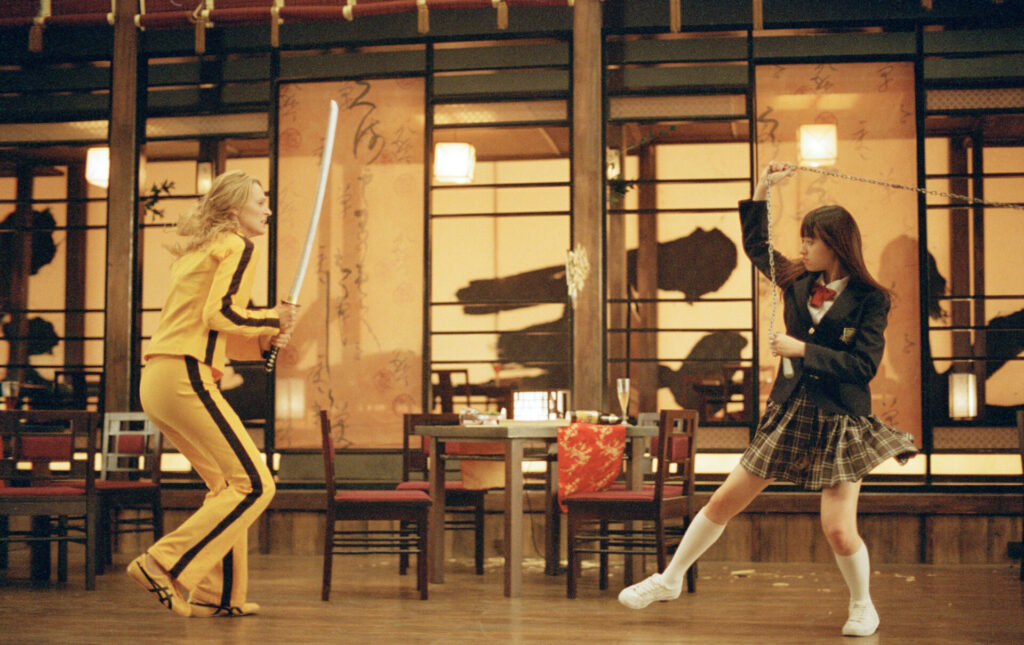
Tarantino’s storytelling is cinematic in the truest sense. He employs visual cues and motifs to guide the audience through the narrative labyrinth. The recurring image of The Bride’s yellow jumpsuit, echoing Bruce Lee’s iconic attire, becomes a visual anchor in the chaotic world of betrayal, vengeance, and martial artistry. Through such choices, Tarantino directs not just the story, but the emotional cadence of the film, ensuring that each moment, whether explosive or intimate, lands with precise impact.
Influences and Homages in Directorial Style
One of the most remarkable aspects of Tarantino’s direction is his fearless synthesis of influences. Kill Bill is a pastiche of martial arts cinema, spaghetti westerns, samurai epics, and even anime. Rather than diluting these genres, Tarantino amplifies their essence, crafting a hybrid cinematic language uniquely his own. The anime sequence detailing O-Ren Ishii’s backstory exemplifies his ingenuity: in a few short minutes, he conveys depth, violence, and tragedy with a style that traditional live-action could not.
Tarantino’s direction demonstrates a deep respect for genre conventions, yet he manipulates them to subvert expectations. In the sword fights, he contrasts hyper-realistic choreography with exaggerated cinematography, allowing the violence to feel simultaneously brutal and operatic. The action is framed with a painterly precision; every slash of the katana, every arching leap, is captured with a deliberate composition that mirrors classical art. This approach transforms fight sequences into visual poetry, emphasizing rhythm and form over mere spectacle.
Cinematic Techniques and Visual Storytelling
Tarantino’s genius in Kill Bill lies not just in narrative and homage but in the meticulous orchestration of cinematic technique. His use of wide shots and extreme close-ups creates a dynamic visual rhythm, guiding the audience’s attention with intuitive grace. The choreography of camera movement is particularly striking in the House of Blue Leaves sequence, where the camera flows through a storm of violence with balletic precision. Tarantino’s direction ensures that each frame is legible, immersive, and emotionally resonant, even amidst chaos.
Color and lighting are deployed with deliberate intent, reflecting both mood and thematic significance. The stark contrast between the icy whites of the snow in the final duel with Elle Driver and the vibrant reds of the blood-splattered House of Blue Leaves sequence is emblematic of Tarantino’s painterly eye. He leverages color to amplify tension, symbolize narrative stakes, and punctuate emotional beats, ensuring that the visual composition carries as much weight as the plot itself.
Tarantino also employs innovative editing techniques to enhance the film’s dramatic impact. The sudden jump cuts, split screens, and shifts between slow motion and rapid motion are not arbitrary; they are carefully calibrated to manipulate audience perception, emphasizing surprise, shock, or exhilaration. These choices reflect Tarantino’s philosophy that editing is an extension of direction, a tool to control rhythm, emotion, and engagement.
The Role of Music in Directing Mood
In Tarantino’s hands, music is inseparable from direction. Kill Bill features a soundtrack that is as narratively purposeful as the visuals, guiding audience emotion with surgical precision. From the surf rock pulses of “Twisted Nerve” to the swelling orchestral cues during climactic duels, Tarantino choreographs sound and image to operate in tandem. The soundtrack often anticipates the emotional turn of a scene, amplifying suspense, anger, or poignancy. By directing how music interacts with visual rhythm, Tarantino transforms each scene into a multisensory experience, where tension and release are felt as much in the ears as in the eyes.
Directing the Bride: Performance and Characterization
Tarantino’s direction is inseparable from his handling of actors, particularly Uma Thurman as The Bride. He meticulously crafts her performance, balancing stoic determination with glimpses of vulnerability, ensuring the character is both mythic and human. The physicality demanded by the role—intense martial arts choreography, emotionally charged duels, and enduring injuries—is seamlessly integrated into her performance through careful directorial guidance. Tarantino’s approach to directing The Bride underscores his ability to merge actor, action, and camera into a unified expressive force.
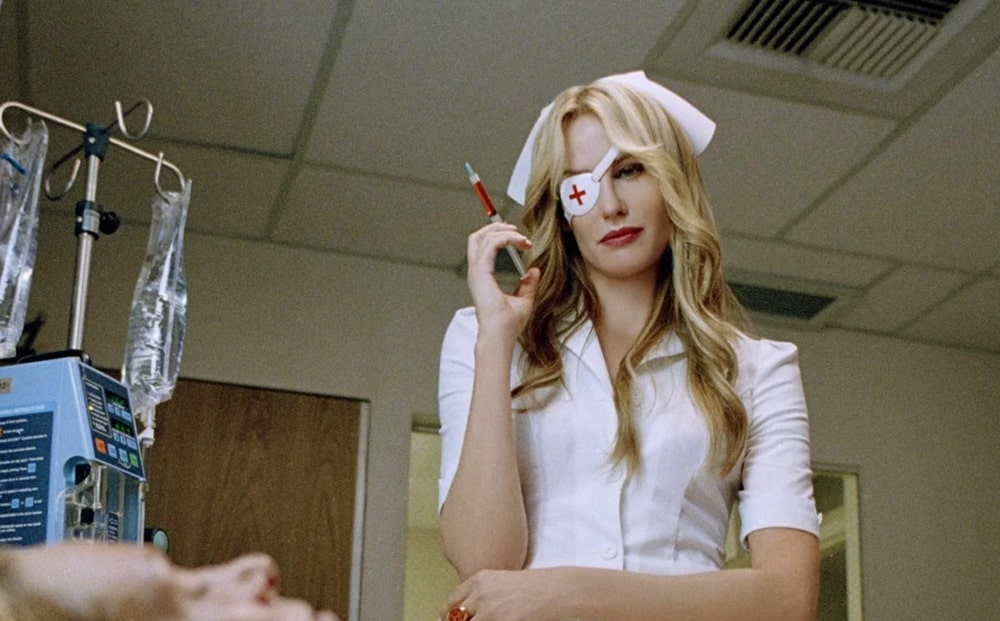
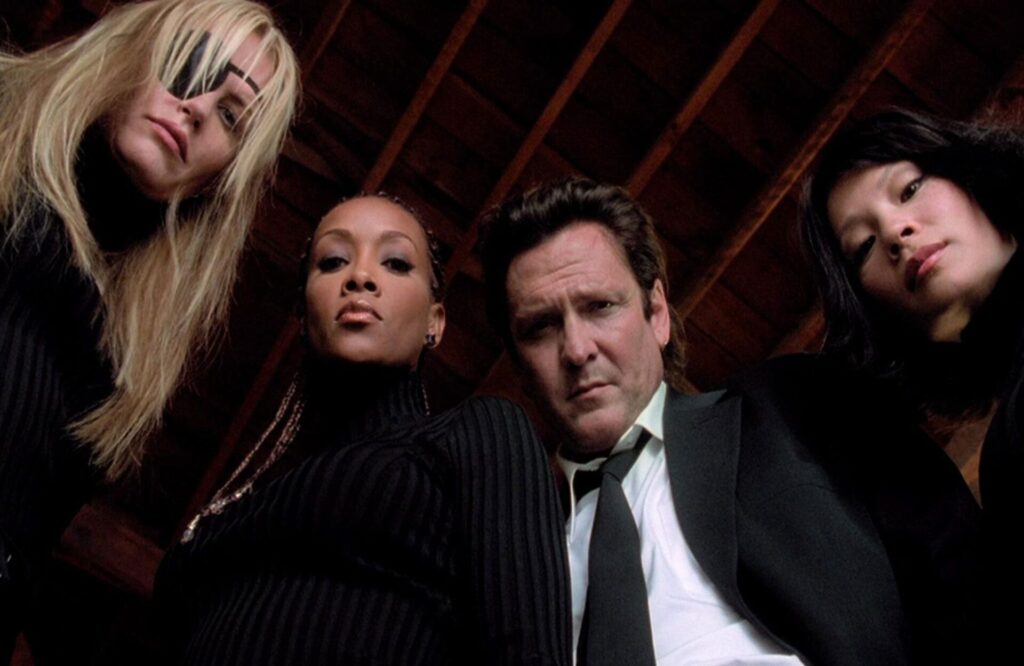
Supporting characters are similarly framed with precision, often introduced in memorable single shots that encapsulate their essence. From Lucy Liu’s O-Ren Ishii to Daryl Hannah’s Elle Driver, Tarantino’s direction ensures that even secondary characters occupy the narrative space fully, contributing to the richness of the world without detracting from the central arc of revenge.
Innovation in Action Cinematography
Action in Kill Bill is not merely functional; it is choreographed with a sense of theatricality and visual invention that transforms violence into narrative expression. Tarantino experiments with perspective, slowing down motion to highlight the elegance of combat or accelerating it to convey chaos and urgency. He frequently shifts between wide shots that contextualize the environment and intimate close-ups that emphasize emotional stakes. This layered approach allows the audience to experience both the physical and psychological dimensions of each fight, underscoring the narrative weight of every strike and counterstrike.
The House of Blue Leaves sequence stands as a masterclass in action cinematography. Tarantino layers long takes, dynamic camera angles, and rhythmic editing to create an almost dance-like quality. The result is not just a fight scene but a carefully orchestrated spectacle that balances visual artistry with visceral excitement. Such direction demonstrates Tarantino’s commitment to ensuring that action is as narratively meaningful as it is visually thrilling.
The Cultural Impact of Tarantino’s Direction
Tarantino’s direction in Kill Bill resonates far beyond technical brilliance; it has profoundly influenced contemporary cinema. The film’s stylistic audacity, genre fusion, and innovative action choreography have inspired a generation of filmmakers to explore bold visual storytelling. Tarantino’s insistence on blending homage with originality challenges conventional genre boundaries, proving that cinema can be both referential and revolutionary.
Moreover, his direction elevates the revenge narrative into an art form. The meticulous framing, symbolic color palettes, and choreographed violence transform what could have been a straightforward tale of vengeance into a layered, almost mythic cinematic experience. By combining narrative complexity with technical virtuosity, Tarantino asserts that directing is not just about telling a story—it is about crafting an entire sensory world that the audience inhabits.
Conclusion
Kill Bill stands as a testament to Quentin Tarantino’s directorial genius, a film where every decision—camera angle, edit, color scheme, soundtrack, and actor direction—contributes to a larger, cohesive vision. His approach transcends conventional filmmaking, transforming narrative, style, and performance into a visual symphony that captivates, thrills, and resonates on multiple levels. Tarantino’s direction demonstrates that true cinematic artistry lies in the harmony of form and content, of technique and emotion.
By fusing genre, honoring cinematic influences, and relentlessly innovating, Tarantino crafts a film that is as emotionally compelling as it is visually spectacular. Kill Bill is not merely a movie; it is a masterclass in direction, a vivid reminder of the transformative power of cinematic vision, and a bold declaration that the art of directing can shape not just a story, but an entire world that lives in the imagination long after the credits roll.
About the Author