When Edward Scissorhands premiered in 1990, audiences were instantly captivated by its strange yet enchanting world. Tim Burton, known for his peculiar blend of dark fantasy and whimsy, crafted a cinematic experience that felt both otherworldly and intimately human. At its core, the film is a study of contrast—the collision of the Gothic and the mundane, the isolated and the communal, the fantastical and the suburban. Burton’s genius lies in how he manipulates visual storytelling to make these contrasts not just apparent but emotionally resonant, transforming what could have been a simple fairy tale into a deeply affecting exploration of identity, isolation, and acceptance.
Suburbia as a Gothic Playground
One of the most striking elements of Edward Scissorhands is Burton’s portrayal of suburbia. The pastel-colored houses, perfectly manicured lawns, and endless rows of cookie-cutter homes could, on the surface, feel like a celebration of domestic perfection. Yet, under Burton’s lens, this utopian veneer takes on an almost sinister quality. Every sharp corner, every repetitive pattern, and every overly symmetrical driveway amplifies a sense of artificiality. Burton’s visual choices emphasize that this seemingly idyllic world is constrained, rigid, and emotionally sterile—a stark contrast to Edward’s messy, expressive, and Gothic existence.
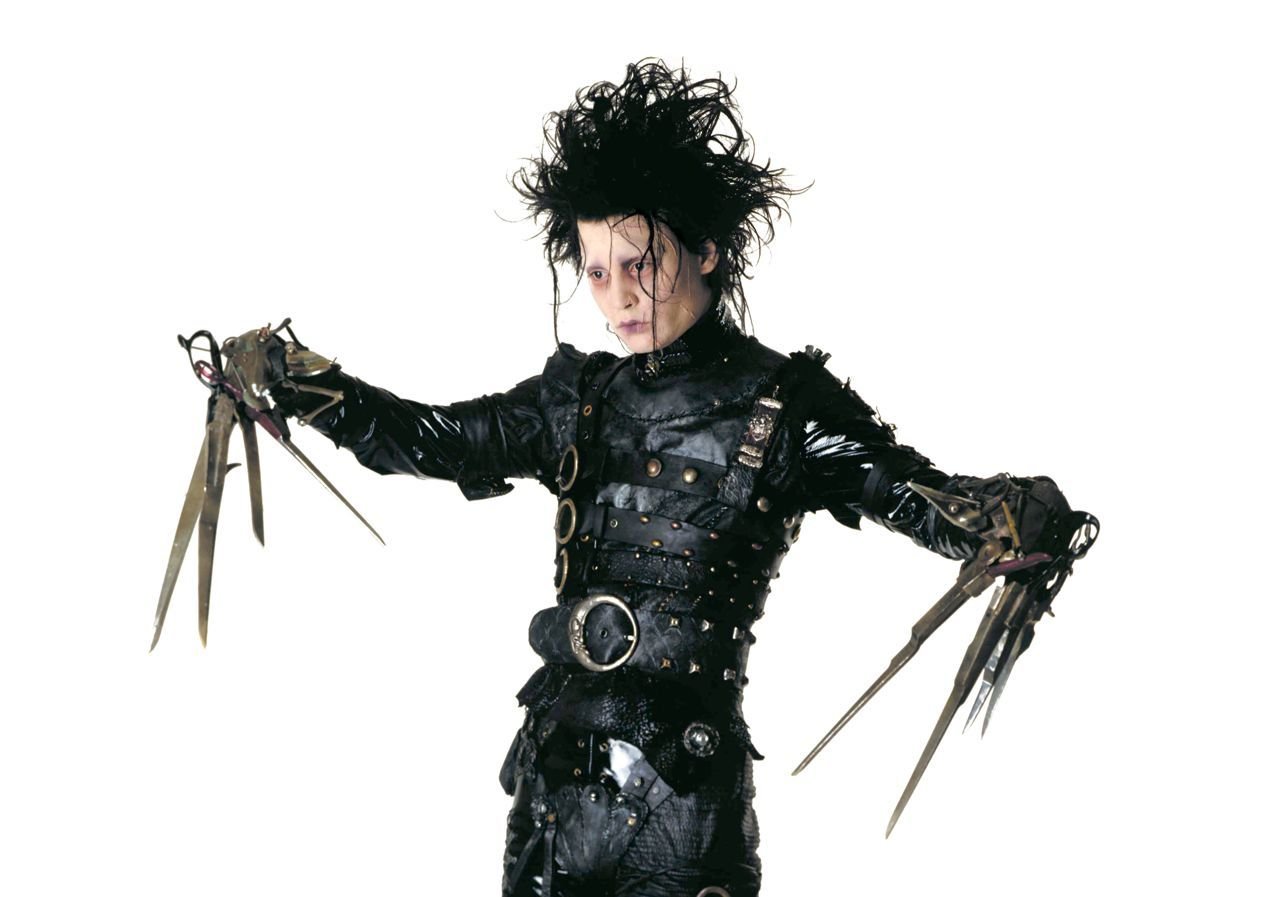
Edward himself, with his pale skin, wild black hair, and scissor-like hands, becomes a living embodiment of this contrast. The sharpness of his appearance and the darkness of his home, perched atop a hill like a brooding castle, is deliberately juxtaposed against the uniform brightness of suburbia. Burton uses this visual dissonance to tell a story even before a single line of dialogue is spoken.
The Power of Visual Symbolism
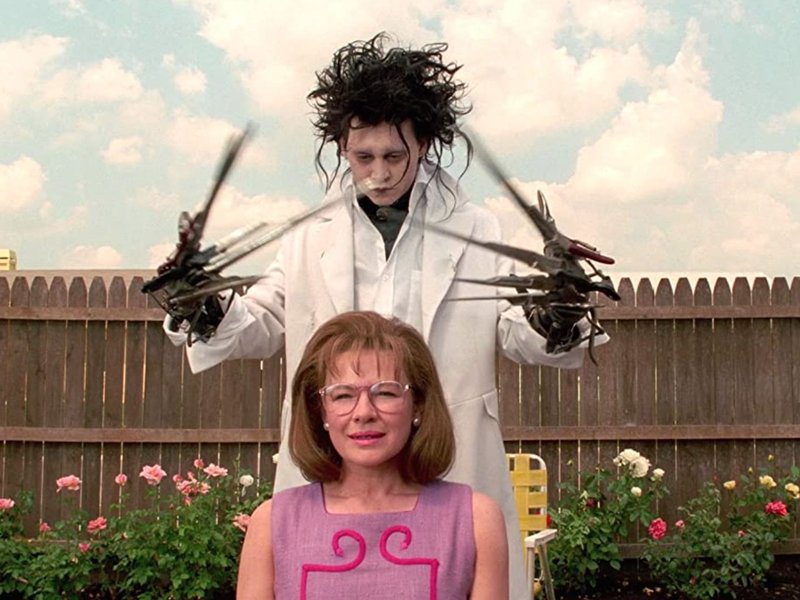
Burton’s mastery of visual symbolism in Edward Scissorhands cannot be overstated. From the very first moments of the film, every frame feels meticulously designed to convey deeper meaning. The scissors themselves, sharp and dangerous yet capable of creating delicate beauty, are a perfect metaphor for Edward’s dual nature. They can carve elaborate ice sculptures and manicured hedges, yet they isolate him from human touch and intimacy. In Burton’s hands, objects become extensions of character, tools through which emotion and narrative unfold.
Color is another key instrument in Burton’s visual storytelling. Suburban exteriors are washed in pastel pinks, blues, and yellows, evoking an almost artificial cheerfulness. Inside Edward’s Gothic mansion, by contrast, muted grays and deep shadows dominate, signaling melancholy and otherness. This deliberate manipulation of color not only highlights the contrast between Edward and his surroundings but also immerses viewers in the emotional landscape of the film. Burton doesn’t just show us a world; he makes us feel it.
Architecture as Emotional Storytelling
Architecture in Edward Scissorhands is more than mere backdrop—it is an emotional narrative in itself. The mansion where Edward lives is a Gothic fantasy, complete with turrets, dark corridors, and jagged edges. Its isolation atop a hill emphasizes Edward’s loneliness while simultaneously evoking awe. Burton’s directorial choice to frame the mansion against the sky, often silhouetted against clouds or the setting sun, transforms it into a visual extension of Edward’s inner life: mysterious, creative, and painfully alone.
In contrast, the suburban homes are rigid and box-like, reflecting a society obsessed with uniformity and appearances. Burton’s camera lingers on these spaces, capturing their sterile perfection, which only amplifies the film’s emotional stakes. The audience feels the suffocating predictability of suburbia, making Edward’s small acts of creativity—shaping topiary animals, sculpting hair, or cutting intricate designs into ice—feel revolutionary.
Cinematic Techniques and Burton’s Signature Style
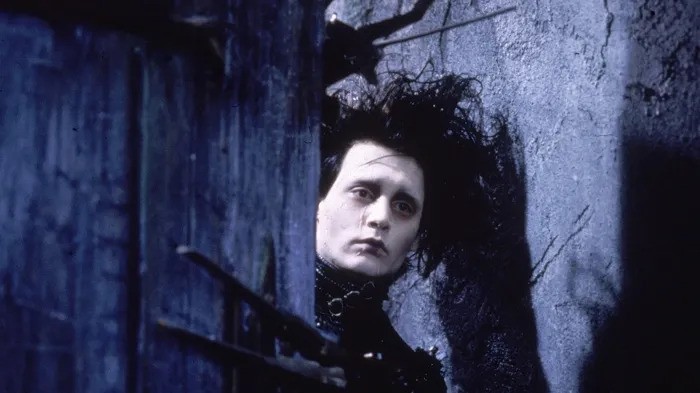
Burton’s directorial choices in cinematography and composition further enhance the film’s storytelling. He often uses wide, symmetrical shots to capture the suburbia in all its repetitive glory, emphasizing the unnatural perfection of the environment. In contrast, Edward’s interactions within the mansion or during moments of vulnerability are framed more intimately, often with tilted angles or close-ups that evoke unease, intimacy, or emotional tension. These decisions reflect Burton’s instinct for marrying form with feeling: every shot is deliberate, every angle chosen to amplify narrative resonance.
Lighting also plays a crucial role in Burton’s visual narrative. The stark contrast between the soft, almost clinical brightness of suburban exteriors and the moody, shadow-laden interiors of Edward’s home creates a visual language of otherness and isolation. By manipulating light, Burton communicates not just the physical space of the story but the psychological and emotional spaces his characters inhabit.
Character Design and Emotional Storytelling
Tim Burton’s collaboration with costume designer Colleen Atwood resulted in character designs that are both memorable and narratively expressive. Edward’s leather outfit, stitched and jagged, mirrors the fractured and incomplete nature of his existence. His appearance is deliberately exaggerated, yet his vulnerability and gentleness shine through, making him one of the most empathetic figures in cinematic history. In contrast, the suburban characters are often clad in overly bright, matching attire, reinforcing the sense of uniformity and social conformity.
Every element of visual design, from hairstyles to landscaping, contributes to the storytelling. Burton’s eye for detail ensures that even the smallest props, like Edward’s hand-crafted ice sculptures or the meticulously pruned hedges, carry narrative weight. The suburban characters’ fascination with Edward’s creativity is visually reinforced through their own meticulously constructed gardens, showing both admiration and the limitations of their imagination.
Social Commentary Through Visual Contrast
Beyond aesthetic choices, Burton’s directing carries a subtle critique of social norms. Suburbia in Edward Scissorhands represents conformity, superficiality, and the fear of difference. The neighbors’ obsession with appearances—their manicured lawns, coordinated pastel colors, and polite smiles—hides underlying judgment and intolerance. Edward, the outsider, disrupts this fragile order not with malice but with creativity and emotion. Burton’s camera captures every reaction to Edward with careful framing: shock, awe, and eventual curiosity. The visual narrative critiques a society that rewards sameness while punishing individuality, illustrating Burton’s recurring thematic interest in the outsider.
Music, Atmosphere, and the Gothic Aesthetic
No discussion of Burton’s visual storytelling in Edward Scissorhands would be complete without acknowledging the role of Danny Elfman’s score. While technically auditory, the music operates in perfect harmony with Burton’s visual sensibilities. Elfman’s melodies, haunting yet tender, underscore the emotional gravity of Edward’s world. When paired with Burton’s imagery—the Gothic mansion, the pastel suburb, the falling snow—the score elevates the film from visual spectacle to immersive experience. Burton’s directorial genius lies in recognizing that visuals and sound together can create emotional resonance far more profound than either could achieve alone.
Snow, in particular, is a recurring visual motif that Burton uses to signify purity, emotional transformation, and the fleeting nature of happiness. The first snowfall, created by Edward’s scissors shaping ice, transforms the neighborhood into a surreal, almost magical landscape. Burton’s framing of this scene, with wide shots capturing astonished faces and falling snowflakes, emphasizes both the beauty of Edward’s creativity and the human capacity for wonder.

Edward as a Symbol of Artistic Vulnerability
Edward himself is the ultimate visual metaphor for the artist or outsider. His scissors, while beautiful in the creations they allow him to make, are also a barrier to intimacy. Burton’s decision to exaggerate Edward’s features—his pale skin, dark eyes, and spiky hair—creates a striking visual that immediately communicates difference. Yet through subtle gestures, expressions, and mise-en-scène, Burton ensures that Edward is not monstrous but profoundly human. The director’s visual storytelling encourages empathy, allowing audiences to confront themes of isolation, judgment, and love through purely cinematic means.
The Timeless Appeal of Burton’s Suburban Gothic
The lasting impact of Edward Scissorhands lies in its ability to make viewers see the familiar in an entirely new way. Tim Burton’s visual storytelling transforms suburbia from a mundane setting into a stage for Gothic wonder. By juxtaposing Edward’s unique world with the uniformity of the neighborhood, Burton not only highlights the beauty of individuality but also critiques the social pressures to conform. The film’s aesthetic remains iconic, influencing generations of filmmakers, designers, and artists who seek to blend whimsy with darkness, fantasy with reality. Its success lies in the director’s ability to fuse emotional storytelling with meticulous visual design, creating a cinematic language that resonates across time.
Conclusion
Edward Scissorhands is more than a movie; it is a masterclass in visual storytelling and directorial vision. Tim Burton’s genius is evident in every frame, from the meticulously designed suburban streets to the haunting beauty of Edward’s Gothic mansion. Through color, architecture, cinematography, and character design, Burton communicates complex themes of isolation, creativity, and societal conformity without relying heavily on dialogue. The film’s emotional resonance stems from the careful balance between the fantastical and the familiar, the whimsical and the somber. In shaping the story through his unique visual lens, Burton created not just a film, but a world—a world that continues to enchant, inspire, and provoke reflection decades after its release.
About the Author