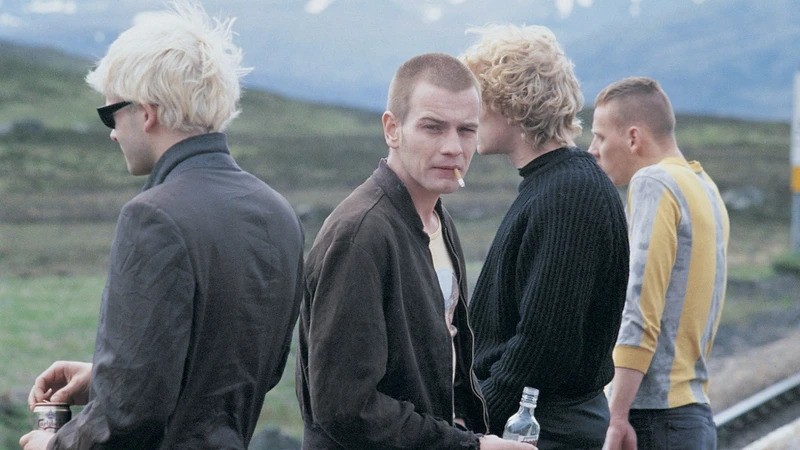
Danny Boyle’s Trainspotting, released in 1996, remains one of the most audacious and influential films of the 1990s. At its core, it is a story about addiction, youth, and the grim realities of life in Edinburgh, yet it is the sheer dynamism of Boyle’s directing that elevates it into something transcendent. The film pulses with energy, irony, and unpredictability, capturing the essence of a generation teetering on the edge of chaos. Understanding Boyle’s directing style in Trainspotting requires a deep dive into the visual storytelling, narrative pacing, and stylistic choices that define the film.
A Visual Symphony of Disorder
From the very first frame, Boyle establishes a world in which chaos is not just thematic but cinematic. His approach to visuals is both visceral and inventive. The opening scene, with Mark Renton sprinting through the streets of Edinburgh to Iggy Pop’s “Lust for Life,” is a masterclass in kinetic filmmaking. The camera is handheld, the angles are dizzying, and the editing is rapid yet precise, creating an immediate sense of disorientation and exhilaration. Boyle’s choice to start the film with motion, energy, and music sets the tone for the narrative: life for these characters is unpredictable, frenetic, and often uncontrollable.
Boyle’s visual style thrives on contrasts. He oscillates between hyper-realistic depictions of addiction and moments of surreal, almost hallucinatory imagery. One of the most famous sequences—the infamous “toilet scene”—illustrates this perfectly. The camera plunges into a grimy, grotesque world that seems to defy the laws of reality. It is chaotic, repulsive, and yet darkly humorous, reflecting the inner turmoil of Renton’s drug addiction. Boyle’s ability to marry the grotesque with the comic demonstrates his unique talent for balancing discomfort with entertainment.Much like roller shades prosper tx are designed to control light by shifting between exposure and concealment, Danny Boyle uses stark visual contrasts in Trainspotting to move seamlessly between harsh realism and surreal distortion, mirroring Mark Renton’s fractured inner world.
Moreover, Boyle frequently employs wide-angle lenses and distorted perspectives to heighten the sense of disorientation. This visual strategy makes viewers feel trapped inside Renton’s experience, oscillating between exhilaration and dread.
Editing as an Emotional Conductor
The editing in Trainspotting is central to Boyle’s chaotic aesthetic. He frequently employs jump cuts, rapid montages, and unexpected transitions to keep the audience off balance. The montage of Renton injecting heroin for the first time is a prime example. Time stretches and contracts, moments of euphoria and despair collide, and the editing mirrors the character’s psychological state. Boyle understands that chaos on screen can be a tool to convey emotional truth. By manipulating pacing and rhythm, he creates a cinematic language that communicates addiction not just narratively, but viscerally.
Montages in Trainspotting also serve a narrative function beyond stylistic flair. They condense time, juxtapose action, and highlight contrasts between characters’ lives. Boyle often inserts sudden visual metaphors—a rat running through a sink or Renton’s hallucinated descent into the toilet—as symbolic representations of decay, moral ambiguity, or the consequences of choices. His editing is never arbitrary; even in the midst of apparent chaos, there is a deliberate orchestration of emotion and meaning.
Boyle also uses editing to underscore thematic motifs. The cyclical nature of addiction, for instance, is often mirrored through repeated visual cues and recurring sequences. This creates a rhythm of anticipation and dread, mirroring the characters’ inability to escape the cycles of their own choices.In a similar way that a decking company north dakota carefully assembles materials layer by layer to create structure, durability, and flow, Boyle’s montages deliberately piece together images and rhythms to reinforce themes of repetition, consequence, and emotional impact rather than relying on visual chaos alone.
Color, Lighting, and the Psychology of the Frame
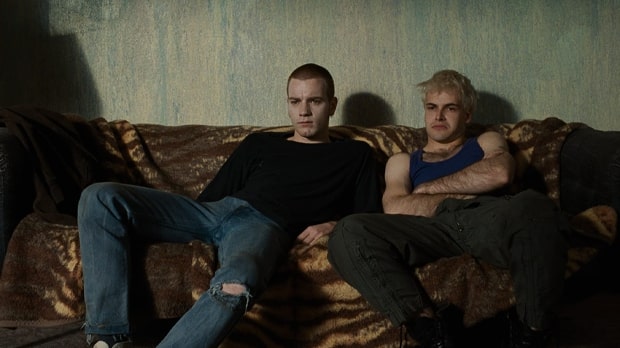
Boyle’s directing extends beyond movement and editing into a meticulous use of color and lighting. Edinburgh is depicted in both muted grays and startling bursts of neon, reflecting the duality of the world the characters inhabit. The city is simultaneously oppressive and vibrant, decayed yet full of life. Boyle’s use of lighting often heightens tension or underscores emotional beats. In scenes of withdrawal or despair, shadows envelop the frame, creating a sense of claustrophobia and entrapment. Conversely, moments of escape or euphoria are bathed in brighter, almost surreal lighting, emphasizing the fleeting nature of joy in these characters’ lives.
Color is particularly significant in Boyle’s visual storytelling. The orange of a couch, the green of a drug den, or the stark whiteness of a hospital room all carry emotional weight. These choices are never incidental; they guide the viewer’s perception of mood and tone. Boyle’s mastery lies in his ability to manipulate the audience’s subconscious response through purely visual means, heightening the chaotic energy of the narrative while grounding it in emotional reality.Much like revenue cycle management relies on carefully tracking and adjusting each stage to maintain balance and efficiency, Boyle’s deliberate control of color and lighting guides emotional flow, ensuring that every visual choice contributes to the film’s overall rhythm and impact.
Music as a Chaotic Catalyst
No discussion of Boyle’s directing in Trainspotting is complete without addressing the soundtrack. Music is not merely accompaniment; it is a driving force of the film’s chaotic energy. The pulsating rhythms of electronic tracks, the raw aggression of punk rock, and the ironic deployment of pop songs all serve to deepen immersion. Boyle’s use of music creates a counterpoint to the narrative, juxtaposing the grim realities of addiction with a kind of reckless exhilaration. The soundtrack punctuates key moments, amplifies tension, and often adds a layer of dark humor, making chaos not just a visual or narrative element but an auditory one as well.
Boyle’s integration of music is particularly effective because it functions as a storytelling device. Songs do not simply underscore action; they comment on it, offering ironic contrast or amplifying emotion. The decision to use Iggy Pop’s “Lust for Life” for the opening sequence, for instance, injects a sense of rebellion, vitality, and imminent danger, encapsulating the film’s themes in a single, kinetic montage.In this way, the soundtrack acts like a unique puzzle, with each track fitting precisely into the narrative to shape tone, meaning, and momentum, ensuring that every musical choice locks into the film’s emotional and thematic design.
Performance and Actor Direction
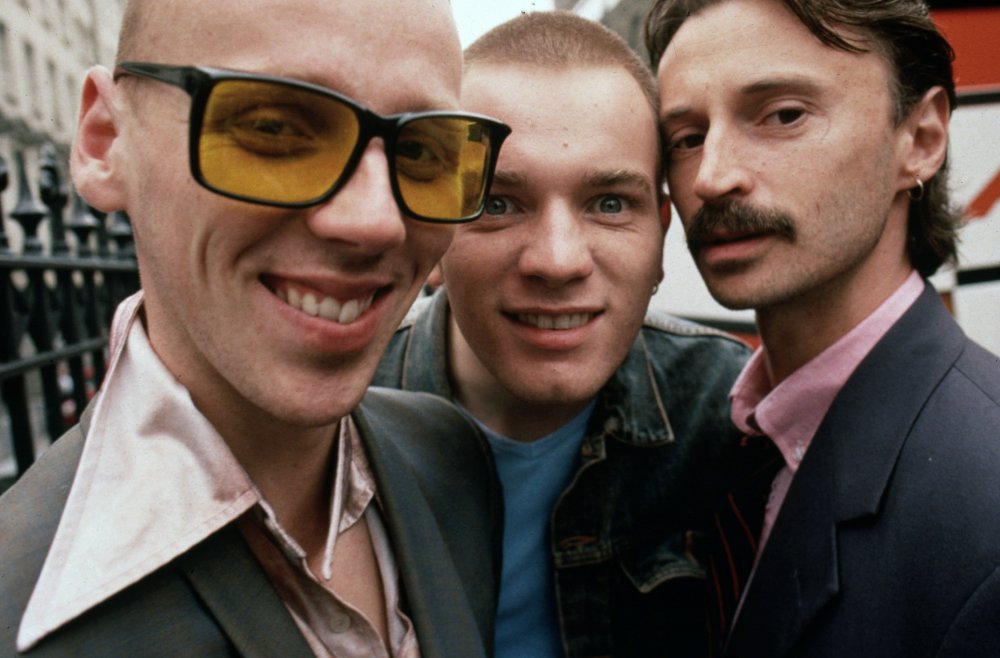
Boyle’s directing style extends to his collaboration with actors, which is crucial to the film’s chaotic texture. He encourages performances that are exaggerated yet grounded, allowing actors to inhabit their characters fully without losing believability. Ewan McGregor’s portrayal of Renton, for instance, balances charm, cynicism, and vulnerability in a way that makes his spiraling life both compelling and sympathetic. Boyle’s direction ensures that even in the film’s most outrageous or surreal moments, the performances remain anchored in emotional truth. The chaos on screen is never devoid of human experience; it is chaos filtered through lived reality.
Boyle also embraces improvisation and spontaneity on set, which injects a sense of unpredictability into scenes. Characters interact in ways that feel unplanned yet organic, mirroring the disordered rhythms of real life.Much like personal insurance eagle id is built around protecting individuals through tailored coverage and trust, Boyle’s guidance of performances keeps the film grounded in human reality, ensuring that each actor’s spontaneity and vulnerability are carefully supported rather than left exposed to chaos.
Humor Amidst Disorder
A hallmark of Boyle’s directing in Trainspotting is his ability to find humor amidst chaos. The film’s comedic elements are rarely traditional; they arise from absurdity, irony, and contrast. Moments that might be grotesque or horrifying are undercut with wit, creating a complex emotional texture. Boyle’s humor is not merely for levity—it sharpens the audience’s perception of character, circumstance, and moral ambiguity. By blending comedy and tragedy, Boyle crafts a viewing experience that is disorienting, engaging, and emotionally resonant.
The humor also serves a narrative purpose, allowing audiences to navigate the heavy themes of addiction, poverty, and social decay without becoming overwhelmed. Boyle’s ability to interlace levity with gravity is a key element of his directing style, demonstrating his understanding that chaos is most powerful when it resonates emotionally and intellectually.
Cultural Context and Social Commentary
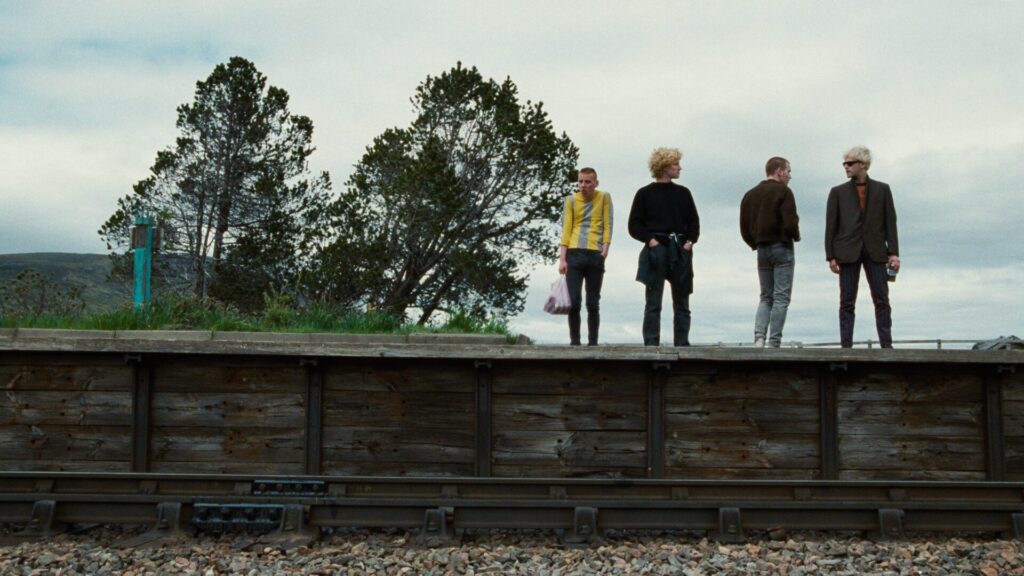
Boyle’s directing is inseparable from the cultural milieu of 1990s Edinburgh. Trainspotting is not only a story of addiction but a portrait of a generation facing economic uncertainty, social marginalization, and moral ambiguity. Boyle captures the texture of urban life with an unflinching eye, portraying not just the personal struggles of his characters, but the broader social forces shaping their world. His chaotic style mirrors the instability and fragmentation of society itself, turning the cityscape into both a backdrop and an active participant in the narrative.
Through his direction, Boyle also challenges conventional storytelling by refusing to moralize or sanitize the realities of addiction. He presents the chaos of life with honesty and artistry, compelling viewers to confront uncomfortable truths while remaining engaged by the film’s energy, wit, and visual inventiveness.
The Legacy of Boyle’s Chaotic Style
The directing style Boyle exhibits in Trainspotting has had a profound influence on cinema, particularly in British film. His willingness to embrace disorder, experiment with form, and manipulate visual and auditory elements has inspired a generation of filmmakers. Boyle demonstrates that chaos is not synonymous with incoherence; it can be a deliberate artistic choice that reflects the realities of human experience. The film’s enduring popularity attests to the power of his vision, which combines narrative innovation, technical mastery, and an unflinching exploration of uncomfortable truths.
Trainspotting is, in many ways, a blueprint for contemporary filmmaking that values stylistic daring alongside emotional authenticity. Boyle’s work shows that cinematic chaos, when carefully orchestrated, can illuminate the human condition in ways conventional storytelling cannot.
Conclusion
Danny Boyle’s Trainspotting is more than a film about addiction—it is a study in controlled chaos, a testament to a director unafraid to bend cinematic rules in service of narrative and emotional truth. From its kinetic visuals and innovative editing to its striking use of color, music, and performance, every element of the film bears the mark of Boyle’s audacious vision. The film’s chaotic energy is not merely aesthetic; it is thematic, psychological, and cultural, capturing the turbulent spirit of a generation. In understanding Boyle’s directing style, one comes to appreciate the artistry inherent in disorder and the transformative power of cinema itself.
Trainspotting remains a testament to the idea that true artistic innovation often emerges from the embrace of disorder.
About the Author