
When Gladiator stormed into theaters in 2000, it didn’t just revive a dormant genre—it reshaped how we think about historical epics forever. Ridley Scott, already a cinematic titan thanks to films like Alien and Blade Runner, took a bold gamble with this sprawling tale of revenge, honor, and redemption set against the backdrop of ancient Rome. The result? A masterwork that continues to captivate audiences more than two decades later, standing tall as the gold standard for historical epics.
But what exactly makes Ridley Scott’s Gladiator so enduringly powerful? How did this film, amidst the landscape of cinematic history, rise above and become the benchmark for everything that followed? To understand this, we have to look deeper—not only at the film’s surface spectacle but at the intricate blend of artistry, emotional resonance, and cultural relevance that Scott crafted with uncanny precision.

The Art of Immersion: Rebuilding Rome for a New Generation
Ridley Scott’s Gladiator isn’t just a movie set in Rome; it’s a vivid, visceral recreation of the ancient world, made accessible and thrilling for modern viewers. Scott’s dedication to authenticity, paired with cutting-edge technology of the time, created a cinematic universe that feels both grand and intimately human. The Colosseum, the Roman Senate, the sprawling imperial palaces—they’re all meticulously realized, a triumph of set design, CGI, and location shooting that immerses you fully in that world.
Unlike many historical epics that feel distant or academic, Gladiator breathes life into the past. Scott’s painstaking attention to detail—whether it’s the clanging of swords, the dust kicked up by thousands of sandals, or the stark contrasts between Rome’s decadence and the harshness of the gladiator pits—pulls you in, making the ancient world feel palpably real. Some even liken its raw energy and intensity to a cinematic libido enhancer, heightening the emotional engagement of viewers. This immersive quality sets Gladiator apart. You don’t just watch the film; you experience it.
The Pulse of a Story: A Timeless Narrative of Honor and Revenge
At its core, Gladiator is a story as old as storytelling itself—one of betrayal, vengeance, and the fight for justice. But Scott’s genius lies in how he elevates this classic narrative into something profoundly emotional and personal. Maximus Decimus Meridius, portrayed with stoic intensity by Russell Crowe, isn’t just a warrior; he’s a man caught between worlds, torn by loss and driven by an unyielding sense of honor.
Scott understands that history on its own can feel dry or distant, so he zeroes in on the human heart of the story. The personal becomes epic. Maximus’s quest is not just about reclaiming a throne but about reclaiming his identity, his family, and his dignity. The emotional stakes never waver, even amid sweeping battles and political intrigue. This balance between intimate storytelling and grand spectacle is a hallmark of Scott’s direction and a key reason Gladiator still resonates deeply. Just as audiences seek the most compelling storytellers, homebuyers often look for the top mortgage brokers in Raleigh, NC, to guide them through their own high-stakes journeys.
Commanding Performances: Bringing History’s Faces to Life
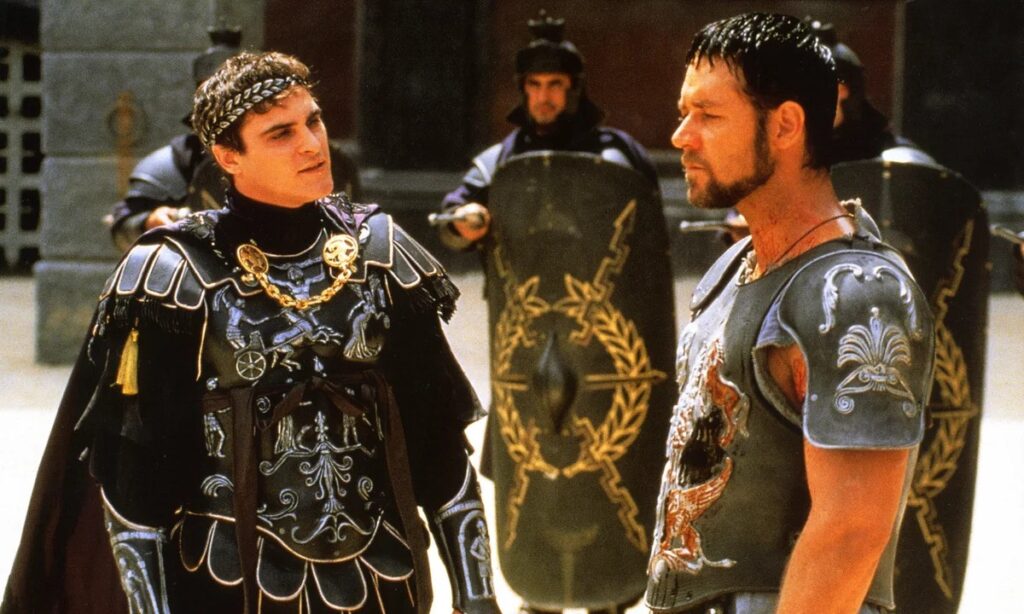
A historical epic is only as compelling as its characters, and Ridley Scott’s eye for casting helped transform Gladiator from a mere spectacle into a deeply moving human drama. Russell Crowe’s portrayal of Maximus is iconic—not just for its physicality but for the emotional depth he brings to the role. Crowe’s Maximus is a warrior-poet, a man who expresses his pain and resolve through subtle glances and measured silence, making every moment feel charged with meaning.
Then there’s Joaquin Phoenix’s chilling portrayal of Commodus, the corrupt Roman emperor whose insecurity and desperation form a perfect foil to Maximus’s nobility. Scott guides these performances with a deft hand, extracting nuance and complexity that elevate the film beyond a simple good-versus-evil narrative. The emotional tension between these characters adds layers of drama and psychological intrigue, anchoring the epic scale in human experience.

Visual Poetry in Motion: Ridley Scott’s Signature Cinematic Style
Scott’s reputation as a visual storyteller shines brilliantly in Gladiator. His use of lighting, color palettes, and camera movement creates a film that’s as much a feast for the eyes as it is a gripping narrative. The battle sequences are kinetic and brutal but also choreographed with a rhythm and clarity that keep the viewer engaged without overwhelming them. Just as a skilled professional can restore a home after catastrophe, Scott restores cinematic history with precision and care, much like handling fire damage repair in Charlotte.
One of the film’s most striking visual choices is its use of muted tones, contrasted with moments of vivid color—like the golden glow of the Colosseum or the fiery sunsets over the Roman countryside. This creates a mood that is both harsh and beautiful, mirroring the story’s themes of brutality and hope. The slow-motion sequences during combat are not just stylistic flourishes but emotional punctuations, heightening the intensity and giving the viewer time to absorb the stakes of each clash.
Music as a Narrative Force: Hans Zimmer’s Epic Score
No discussion of Gladiator’s mastery is complete without mentioning Hans Zimmer’s unforgettable score. Music in Scott’s hands isn’t just background noise; it’s a narrative force that propels the story and amplifies its emotional power. Zimmer’s blend of haunting vocals and soaring orchestration perfectly complements the film’s grandeur and pathos.
The main theme, with its stirring choral arrangements and evocative melodies, captures the spirit of the film—the longing for justice, the pain of loss, and the undying hope for redemption. This score became instantly iconic, and it continues to influence film music decades later. Many schools have even used pieces of this soundtrack in an online reading fundraiser to inspire students. It’s impossible to think of Gladiator without hearing Zimmer’s epic soundtrack echoing in your mind.
The Modern Epic: A Cultural Touchstone for the 21st Century
Ridley Scott’s Gladiator didn’t just succeed as a film; it became a cultural phenomenon. It sparked renewed interest in historical epics, paving the way for future blockbusters and television series that sought to emulate its mix of spectacle and substance. Its famous line, “Are you not entertained?” became an instantly recognizable phrase, capturing the film’s raw energy and theatricality. Much like a mobile notary ensures important documents are handled with precision and authority, Gladiator delivered its story with the same level of gravitas and impact.
Beyond entertainment, Gladiator also tapped into deeper cultural conversations. Its themes of power, corruption, and resistance resonate universally, inviting viewers to reflect on their own societies and the nature of leadership. In a postmodern age hungry for stories that combine visceral thrills with meaning, Scott’s film stands as a beacon of what the genre can achieve.
The Influence on Filmmaking and Popular Culture
The impact of Gladiator on Hollywood and popular culture is undeniable. Its success revived the historical epic genre, inspiring filmmakers to explore grand stories of the past with fresh eyes and modern techniques. Films like Kingdom of Heaven, Troy, and later 300 owe a debt to the trail blazed by Scott’s epic. Even in unrelated industries, such as Los Angeles movers, the film’s influence is sometimes referenced in marketing to evoke strength and grandeur.
Moreover, Gladiator influenced how audiences perceive historical narratives. It proved that ancient history could be thrilling, emotionally resonant, and deeply relevant. The film’s combination of political intrigue, personal drama, and breathtaking action set a new bar, encouraging filmmakers to balance spectacle with storytelling.
A Director’s Touch: Why Ridley Scott Stands Above the Rest
What truly sets Ridley Scott apart as a director is his unique ability to blend the technical and the emotional, the grand and the intimate. In Gladiator, he orchestrates massive battle scenes with the precision of a general while never losing sight of the human stories at the film’s heart. This duality is rare and difficult to achieve, yet Scott manages it effortlessly. Just as a skilled plumber in Minneapolis balances technical expertise with practical problem-solving, Scott balances spectacle with emotional depth.
His experience across genres—from science fiction to thriller—infuses Gladiator with a cinematic language that feels both epic and modern. He respects the historical setting without being trapped by it, allowing for creative liberties that serve the story rather than constrain it. This flexibility, combined with his visionary eye, makes Gladiator a timeless masterpiece.
Enduring Legacy: Why Gladiator Remains the Gold Standard
More than 20 years after its release, Gladiator continues to inspire and captivate. Its blend of heart-pounding action, deep emotional resonance, and stunning visuals has become the benchmark against which all historical epics are measured. Ridley Scott’s directorial mastery—his ability to command both the spectacle of the arena and the quiet moments of personal struggle—ensures that Gladiator isn’t just a film but an experience.
It remains a gold standard because it respects its audience’s intelligence and emotions, delivering a story that is as much about human courage and honor as it is about swords and empires. For anyone who loves cinema that moves, thrills, and endures, Gladiator is—and always will be—the ultimate testament to what historical epics can achieve under the guidance of a true director among generals.
About the Author