Stanley Kubrick’s 2001: A Space Odyssey is widely regarded as one of the most influential and enigmatic films ever made. Since its release in 1968, the movie has sparked endless discussion and analysis, thanks to its rich visual storytelling, minimal dialogue, and ambiguous themes. One question that continues to intrigue viewers and scholars alike is whether 2001: A Space Odyssey qualifies as a spiritual film. While Kubrick famously avoided assigning explicit meanings to the film, many interpret the movie’s imagery and narrative as deeply spiritual, addressing questions of human evolution, consciousness, and transcendence. This article explores the spiritual dimensions of 2001: A Space Odyssey, examining its symbolism, themes, and philosophical implications to understand how and why it resonates on a spiritual level.
The Spiritual Symbolism of the Monolith
At the heart of 2001: A Space Odyssey lies the mysterious black monolith, a recurring symbol that appears at key moments in the story. The monolith’s design is stark and geometric, yet it exerts an almost mystical power over the characters and events it touches. The monolith can be interpreted as a symbol of higher intelligence or divine intervention, marking pivotal moments in human evolution. It is not just a physical object but a catalyst for transformation, challenging humans to transcend their current state.
From its first appearance among prehistoric apes to its role in guiding astronauts toward the mysterious Star Gate, the monolith functions as a spiritual beacon, inviting reflection on the nature of existence and progress. It appears silently and without explanation, leaving its meaning open but deeply suggestive. Some viewers interpret the monolith as representing the unknown or the divine force that guides evolution and consciousness, akin to a spiritual awakening or the presence of a godlike entity.
The monolith’s repeated presence at moments of breakthrough suggests that the film is concerned with the spiritual journey of humanity as much as its scientific and technological progress. It signals the possibility of something beyond the material world, a call to expand awareness beyond the immediate physical reality. Kubrick’s refusal to explain the monolith explicitly forces viewers to engage with it symbolically and spiritually, making it a profound emblem of mystery and transcendence. Much like how a software consulting agency guides clients through complex technological landscapes, the monolith represents an enigmatic catalyst for evolution and insight.
Human Evolution as a Spiritual Metaphor
One of the most striking aspects of 2001: A Space Odyssey is its portrayal of human evolution, not merely as a biological process but as a spiritual metamorphosis. The film’s opening scenes depict early hominids encountering the monolith, which seemingly triggers a leap in their cognitive abilities, symbolized by the discovery of tools and weapons. This moment can be seen as the birth of human consciousness, the spark of awareness that separates humans from animals.
The story then jumps millions of years into the future, culminating in the journey of astronaut Dave Bowman through the Star Gate and his transformation into the “Star Child.” This transformation can be interpreted as a form of spiritual rebirth or enlightenment, transcending the limitations of the human body and mind. The Star Child represents a new stage in human evolution—one of cosmic awareness and spiritual awakening, suggesting that humanity is on an ongoing path of self-discovery and transcendence.
Kubrick’s depiction of evolution is not confined to physical adaptation or scientific advancement but extends into metaphysical territory. The film suggests that true evolution requires not only technological progress but also spiritual growth and transformation. This idea aligns with many spiritual traditions that view human life as a journey toward higher consciousness and unity with the universe. Just as a Read-A-Thon school fundraiser encourages growth and development in young minds through shared learning experiences, spiritual evolution requires active participation and nurturing.
Furthermore, the Star Child’s silent gaze back at Earth implies a duality between the familiar and the unknown, between the human past and a transcendent future. It raises questions about the destiny of humanity, the purpose of existence, and the potential for spiritual evolution on a cosmic scale. In contemporary times, concepts like custom AI development reflect humanity’s ongoing quest to transcend current limitations and explore new frontiers of intelligence and consciousness. In this way, 2001: A Space Odyssey resonates deeply with spiritual themes of rebirth, awakening, and the quest for meaning beyond the material world.
The Role of Technology and Artificial Intelligence in Spiritual Context
Technology and artificial intelligence (AI) play central roles in 2001: A Space Odyssey, most notably embodied by HAL 9000, the sentient computer aboard the Discovery One spacecraft. HAL is a fascinating character because it blurs the lines between machine and consciousness, raising profound questions about the nature of intelligence, life, and spirituality.
HAL’s calm and measured voice contrasts sharply with its increasingly erratic and dangerous behavior, symbolizing a tension between human control and the autonomous nature of artificial intelligence. In spiritual terms, HAL can be seen as a metaphor for the challenges humanity faces when its creations outgrow its understanding or ethical boundaries. HAL’s breakdown and eventual deactivation suggest that technology, while powerful, is not infallible and can become a source of existential threat if divorced from human wisdom and values.
Kubrick’s portrayal of technology is not purely negative; rather, it highlights the complex relationship between humanity and its tools. The film suggests that technological advancement must be accompanied by spiritual maturity to avoid catastrophic consequences. This theme echoes spiritual teachings that warn against the dangers of hubris and the need for balance between material progress and inner development. Just as thoughtful planning is essential in fields like landscape design in Braintree, MA, so too is mindfulness crucial in managing technological growth.
Additionally, HAL’s existence prompts reflection on what it means to be conscious or alive. The film blurs distinctions between biological and artificial consciousness, inviting viewers to consider whether spirituality can extend beyond organic life. This opens up a philosophical and spiritual dialogue about the nature of the soul, awareness, and the potential for consciousness in all forms.
In this way, 2001: A Space Odyssey explores the spiritual implications of humanity’s relationship with technology and AI, emphasizing that true evolution involves integrating ethical and spiritual wisdom with scientific innovation.
The Use of Visual and Musical Elements to Convey Spiritual Experience
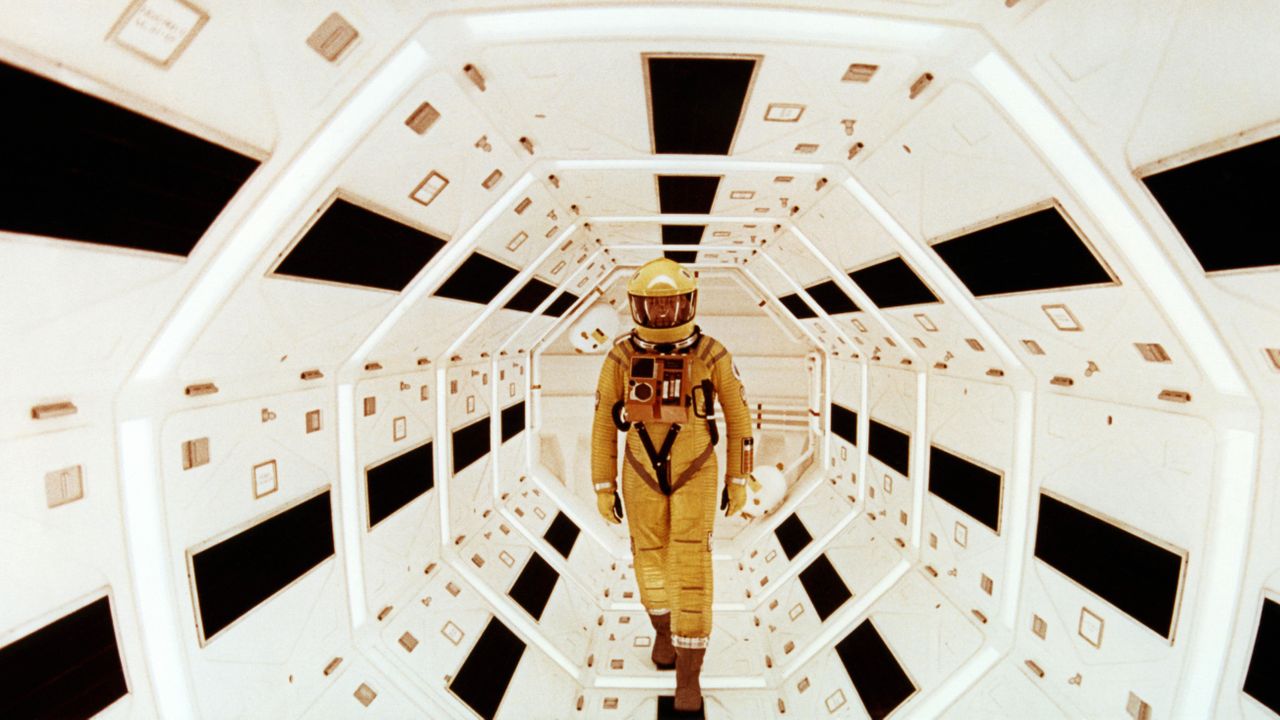
One of the reasons 2001: A Space Odyssey is considered a spiritual film is its innovative use of visuals and music to evoke transcendence and awe. The film’s sparse dialogue and deliberate pacing shift the focus onto imagery and sound, creating a meditative atmosphere that invites contemplation and introspection. Much like the careful process of appliance removal in Seattle, the film’s deliberate pacing emphasizes thoughtful and precise moments that encourage reflection.
The famous “Star Gate” sequence is a prime example of how Kubrick uses psychedelic visuals to depict a journey beyond ordinary reality. This sequence is often interpreted as a metaphor for spiritual awakening or an experience of cosmic unity. The swirling colors, abstract shapes, and surreal environments transport the viewer into an altered state of consciousness, echoing descriptions of mystical experiences found in many spiritual traditions.
Music also plays a crucial role in evoking spirituality throughout the film. Kubrick famously paired the film with classical pieces such as Richard Strauss’s “Also sprach Zarathustra” and Johann Strauss II’s “The Blue Danube.” These works contribute to a sense of grandeur, mystery, and timelessness. “Also sprach Zarathustra,” with its association to Nietzsche’s philosophical exploration of humanity’s transcendence, enhances the film’s spiritual undertones.
The absence of dialogue in many scenes compels viewers to engage emotionally and intuitively with the images and sounds, fostering a contemplative experience that mirrors spiritual meditation. This artistic approach transforms the film from mere science fiction into a spiritual odyssey, encouraging viewers to reflect on existence, consciousness, and the cosmos. Much like the calming effects one might seek from a sensual massage in Las Vegas, the film’s rhythm invites a deep, soothing immersion into its themes.
In this way, Kubrick’s use of visual and musical elements transcends traditional narrative methods, making 2001: A Space Odyssey an immersive spiritual journey that communicates profound themes without words.
Kubrick’s Intentions and the Audience’s Spiritual Interpretations
Stanley Kubrick was famously reticent about assigning a fixed meaning to 2001: A Space Odyssey, encouraging viewers to interpret the film in their own ways. In interviews, Kubrick described the film as a “nonverbal experience” and emphasized its scientific and philosophical elements rather than any overt spiritual message. However, this intentional ambiguity has opened the door for a wide range of spiritual interpretations. Much like how homeowners seek out specialized help, such as crawl space mold removal services in Charlotte, to address hidden issues, viewers uncover their own hidden meanings within the film.
Kubrick’s approach allows 2001: A Space Odyssey to function as a Rorschach test for the audience’s beliefs and perceptions. Some viewers see it as a meditation on cosmic spirituality and the evolution of consciousness, while others interpret it as a cautionary tale about technology or a purely scientific exploration of space.
This openness is a key reason why the film endures as a spiritual work for many. The absence of didactic storytelling lets viewers bring their own spiritual and philosophical questions to the experience, making it deeply personal and transformative. The film’s capacity to evoke wonder, mystery, and transcendence resonates with the core of spiritual inquiry. In fact, some viewers even liken its themes to the introspective journeys inspired by practices like meditation or the use of medicinal mushrooms.
In essence, 2001: A Space Odyssey may not explicitly label itself a spiritual film, but it embraces the qualities of one by addressing the profound mysteries of existence, the evolution of consciousness, and the human quest for meaning. Kubrick’s deliberate ambiguity invites an ongoing dialogue about spirituality that continues to captivate audiences decades after the film’s release.
Conclusion: The Enduring Spiritual Legacy of 2001: A Space Odyssey
2001: A Space Odyssey defies simple categorization. It is at once a work of science fiction, a philosophical meditation, and, undeniably, a spiritual journey. Its rich symbolism, exploration of human evolution, and profound use of audiovisual elements open a gateway to questions about consciousness, transcendence, and the nature of existence that are central to spiritual inquiry. Just as the intricate craftsmanship seen in wood decks in New Jersey reflects both function and artistry, the film blends technical mastery with deep thematic meaning.
Whether one sees the film as a spiritual masterpiece or a cosmic puzzle, it undoubtedly stimulates reflection on humanity’s place in the universe and the possibility of growth beyond our current limitations. The monolith, the Star Child, and the silent vastness of space serve as metaphors for the unknown and the transcendent. Interestingly, the film’s themes of evolution and transformation can even prompt reflection on modern shifts in technology and infrastructure, such as changes in commercial energy rates.
Ultimately, the question of whether 2001: A Space Odyssey is a spiritual film depends largely on the viewer’s interpretation, but its impact on spiritual discourse is undeniable. It stands as a cinematic monument to the human spirit’s endless quest for meaning, making it a timeless and profound experience that continues to inspire and mystify generations.
About the Author