Pedro Almodóvar is often celebrated for his dazzling use of color, his fearless portrayal of sexuality, and his deeply human characters, but one of the most potent tools in his cinematic arsenal is sound. From the subtlest background noise to the sweeping musical score, Almodóvar’s films leverage auditory elements to deepen emotional resonance, guide narrative flow, and amplify the psychological complexity of his characters. His mastery of both sound and silence demonstrates that a film’s impact extends far beyond what we see on the screen; it is equally defined by what we hear, or sometimes, what we are made painfully aware of not hearing.
The Emotional Power of Music in Almodóvar’s Cinema
Music in Almodóvar’s films is not merely decorative; it is narrative-driven. The director frequently collaborates with composers such as Alberto Iglesias, whose scores have become synonymous with the director’s signature emotional intensity. In Talk to Her (Hable con Ella, 2002), Iglesias’s music oscillates between melancholy and hope, guiding the audience through the complex web of longing, unspoken desire, and ethical ambiguity. The piano motifs and lush string arrangements punctuate moments of intimacy and loneliness, creating a sonic landscape where silence alone could not suffice.
Similarly, in Volver (2006), Almodóvar employs the iconic voice of Carmen Maura and Penélope Cruz not only through their performances but also through the integration of traditional Spanish songs. These musical choices evoke nostalgia and cultural memory, intertwining personal narratives with a collective Spanish identity. The music often functions as a character itself, offering commentary on the unfolding drama or foreshadowing emotional turns. This deliberate intertwining of music and story showcases Almodóvar’s understanding of sound as an emotional narrator, capable of speaking to audiences on an instinctive, almost visceral level.
In Women on the Verge of a Nervous Breakdown (Mujeres al borde de un ataque de nervios, 1988), music becomes an agent of emotional rhythm. The buoyant pop and dramatic orchestral flourishes reflect the chaotic, impulsive energy of the film’s characters. Almodóvar uses music to mirror the emotional turbulence of everyday life in Madrid, highlighting the interplay between comedy, tension, and human vulnerability.
Silence as a Narrative Device
While Almodóvar is celebrated for his vibrant and emotionally rich soundscapes, he is equally adept at using silence to create tension and introspection. In All About My Mother (Todo sobre mi madre, 1999), moments of near-total silence heighten the impact of tragedy and introspection. When Manuela grapples with the loss of her son, the absence of sound allows the audience to inhabit her grief fully. Silence, in this context, is not emptiness—it is an active force that draws attention to what is emotionally unsaid, inviting viewers to engage more deeply with the characters’ inner worlds.
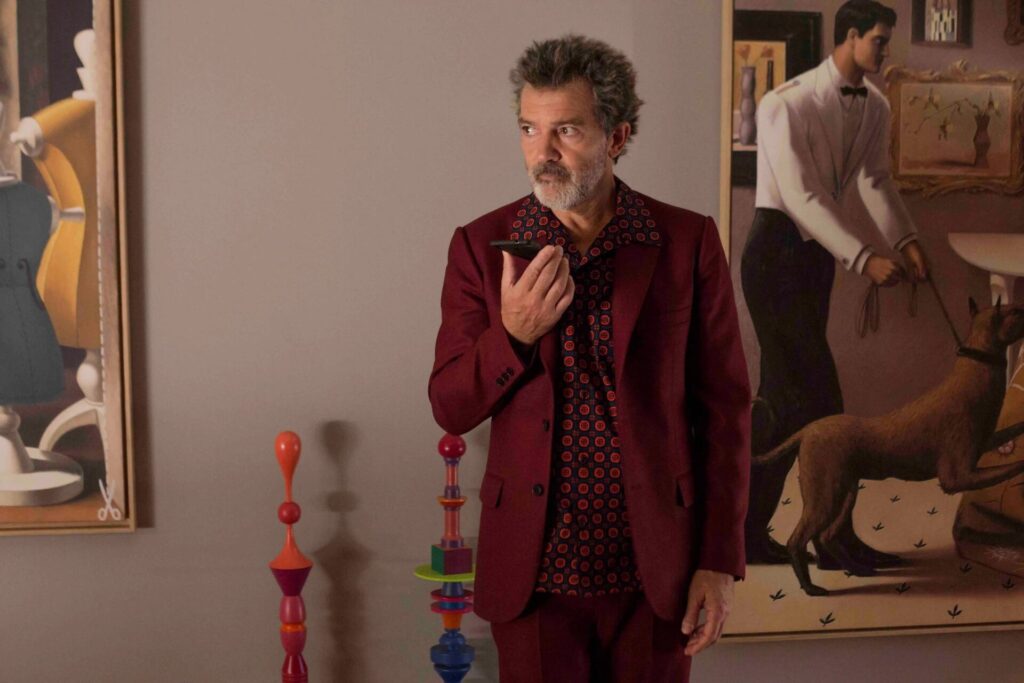
Silence also accentuates Almodóvar’s use of diegetic sound—the sounds that originate within the story world itself. In Pain and Glory (Dolor y gloria, 2019), the creaking of doors, the rustle of clothing, and the ambient city noises provide a textured realism that complements Antonio Banderas’s intimate portrayal of a director reflecting on his life. By alternating between lush musical arrangements and moments of quiet, Almodóvar establishes a rhythm that mirrors the ebb and flow of human emotion. The contrast between sound and silence is almost choreographic, creating a narrative tempo that guides the audience’s emotional responses with subtlety.
Even in The Flower of My Secret (La flor de mi secreto, 1995), moments of silence are pivotal. The protagonist, Leo, experiences intense isolation, and Almodóvar allows the soundscape to recede, leaving the audience immersed in her internal world.
Layering Sound to Mirror Psychological Complexity
Almodóvar often layers multiple sound elements to mirror the psychological states of his characters. In The Skin I Live In (La piel que habito, 2011), the eerie, almost surgical precision of the sound design mirrors the unsettling tension of the narrative. Every mechanical hum, every metallic click, every controlled sound in the laboratory environment amplifies the feeling of confinement, obsession, and hidden menace. In these films, sound is not supplementary—it is intrinsic to storytelling, revealing psychological nuances that dialogue alone cannot convey.
Even in moments of high drama, Almodóvar’s sound design resists conventional cinematic cues. In Bad Education (La mala educación, 2004), the interweaving of past and present is underscored by a soundscape that oscillates between nostalgia and unease. The echoes of old classrooms, the distant hum of city streets, and subtle musical motifs serve as auditory markers of memory, trauma, and desire. The audience is guided not just by what they see but by what they hear—or what they sense is deliberately absent.

Cultural Resonance Through Sound
Almodóvar’s films are profoundly rooted in Spanish culture, and sound plays a critical role in reflecting this context. The director often integrates flamenco, zarzuela, or contemporary Spanish pop to situate his stories culturally and emotionally. In Women on the Verge of a Nervous Breakdown, the exuberant, upbeat score mirrors the chaotic energy of Madrid and the emotional volatility of the characters. Music becomes a vehicle through which cultural identity is both celebrated and interrogated, enhancing the realism and specificity of the story world.
In Volver, music evokes traditional Spanish memory while engaging with the present. The film’s use of songs sung by its characters bridges the personal and communal, blending private emotion with a collective cultural narrative. Almodóvar understands that music is a vessel for memory and identity, and he deploys it to emphasize themes of family, loss, and resilience. The audience is transported not only through story but through sound, making the experience emotionally and culturally immersive.
Furthermore, Almodóvar frequently juxtaposes popular music with silence or unsettling sound effects to create irony or underscore emotional tension. This interplay between expectation and subversion is part of what makes his films feel simultaneously vibrant, unpredictable, and deeply human.
The Collaboration Behind the Sound
Almodóvar’s meticulous attention to sound is matched by his collaborative approach. He works closely with composers, sound designers, and editors to ensure that every auditory element contributes meaningfully to the story. This attention to detail is evident in the seamless integration of score, dialogue, and ambient noise, creating a layered experience that feels organic rather than imposed.
In interviews, Almodóvar has emphasized the importance of listening—not just to the music or the actors, but to the rhythm of the city, the cadence of language, and the emotional resonance of each scene. This holistic approach ensures that sound in his films is never incidental; it is as carefully constructed as the visual composition, often carrying the weight of narrative and emotional arcs.
Sound as Emotional Architecture
Ultimately, Almodóvar’s use of sound and silence can be understood as emotional architecture. Music guides the audience’s emotional response, sound effects build psychological tension, and silence creates space for reflection and immersion. In films such as Talk to Her, Volver, The Skin I Live In, and Pain and Glory, sound is inseparable from character development, plot progression, and thematic exploration. The auditory landscape becomes a mirror of the characters’ inner lives, a bridge between cultural specificity and universal human experience.
Sound and silence are not mere tools for embellishment; they are fundamental elements of Almodóvar’s cinematic language. They transform ordinary scenes into profoundly affecting experiences, imbuing his films with layers of meaning that resonate long after the credits roll. Whether through the lush strings of Alberto Iglesias’s scores or the oppressive hum of a laboratory in The Skin I Live In, Almodóvar demonstrates that the true power of cinema lies not only in what we see, but in what we hear and, crucially, in what we do not hear.
The Audience’s Auditory Journey
What makes Almodóvar’s approach extraordinary is how it shapes the audience’s perception of emotion. In Broken Embraces (Los abrazos rotos, 2009), the juxtaposition of past and present is mirrored through shifting soundscapes. The muffled echoes of old films, the intimate sounds of whispered conversations, and the swelling orchestral score create a layered emotional experience that pulls the audience into both the character’s memories and their present reality. Through sound, Almodóvar guides the audience not just to observe emotion but to feel it, to inhabit it fully.
Even seemingly small choices—a character humming a song off-screen, the distant rumble of traffic, the quiet ticking of a clock—become narrative instruments. Almodóvar understands that our emotional response is as much auditory as visual.
Conclusion
Pedro Almodóvar’s films reveal that sound is not a secondary concern but a vital narrative and emotional tool. Through his careful orchestration of music, ambient noise, and silence, he creates immersive worlds that speak directly to the audience’s emotions and memories. His mastery of auditory storytelling complements his visual flair, creating films that are as sonically rich as they are visually stunning. By listening as closely as he directs, Almodóvar reminds us that cinema is an experience for all the senses, where every note, every whisper, and every pause carries meaning. In his hands, sound is not simply heard—it is felt, shaping the emotional architecture of the film and leaving an indelible impression on every audience member fortunate enough to experience it.
About the Author