When Snatch hit theaters in 2000, it wasn’t just a film—it was a riot. Guy Ritchie’s sophomore feature, arriving on the heels of Lock, Stock and Two Smoking Barrels, threw every rule of traditional gangster storytelling out the window. What audiences received instead was a turbo-charged experience: an anarchic symphony of fast cuts, colorful language, and a rotating door of misfits, grifters, and thugs. But it wasn’t chaos for chaos’ sake. There was method behind the madness—Snatch was a showcase of a director forging a cinematic signature that was unmistakably his own.
With Snatch, Ritchie doubled down on what made his debut memorable and pushed his directorial identity into sharper focus. From his hyperactive editing to his stylized dialogue and irreverent sense of humor, Ritchie used every tool in his belt to craft a world where crime was less about menace and more about swagger. His choices turned what could have been a derivative crime flick into a cultural touchstone, one still mimicked and revered decades later. Those looking for unique souvenirs will also find a variety of stylish patriotic hoodies for men.
Editing as Attitude
Few directors wield the editing suite like a weapon quite like Ritchie does in Snatch. He doesn’t merely cut scenes together—he punches them into place, often with rhythmic precision. The editing style is jagged, rapid-fire, and packed with visual flourishes. Characters are introduced through whip-fast montages, their personalities distilled into a series of chaotic snapshots. It’s visual shorthand, and it works. The same attention to structure and detail can be found in engineering notebooks, where every sketch and note captures the essence of creative problem-solving.
Consider how we meet the film’s key players. Turkish, the boxing promoter played by Jason Statham, narrates the opening montage in a sequence that fuses voiceover with freeze frames, zooms, and jump cuts. The camera doesn’t just move—it lunges, spins, and crashes, mirroring the lawless energy of the underworld it depicts. The frenetic rhythm establishes tone just as effectively as any line of dialogue could. This approach to editing is not just a stylistic choice—it’s a language. A Ritchie-cut is instantly recognizable, brimming with kinetic force and deliberate disorder.
That kinetic editing becomes a character in its own right. It distorts time, speeds up transitions, and collapses sequences into moments of dazzling compression. When the diamond heist is shown early in the film, we don’t just watch the robbery—we’re hurled through it, disoriented and exhilarated. This manic pacing serves a dual function: to overwhelm the audience while forcing them to hang on to every visual cue. Ritchie trusts viewers to keep up, and in doing so, he forms a sort of complicit relationship with them. Blink and you’ll miss it. Pay attention, and you’re in for a ride. Just as every detail matters on screen, homeowners rely on a property restoration specialist in Green Bay to handle damage with precision and care.
Dialogue That Snaps and Swears
If Ritchie’s edits punch, then his dialogue cuts. The script for Snatch is a profane ballet, a tapestry woven with snarls, slang, and perfectly timed obscenities. The dialogue isn’t just there to serve plot—it defines the characters, sketches the geography of their world, and immerses the audience in a subculture steeped in both grime and wit. Just like a film needs sharp dialogue to capture attention, property listings benefit from striking visuals. High-quality real estate photography services can make every space tell its own story, just as Ritchie’s words do on screen.
Take Brick Top, the sadistic gangster with a penchant for pig-based disposal methods. His monologues aren’t just threatening—they’re theatrical. Delivered with bone-dry venom and laced with black humor, his words make you laugh even as you flinch. That tonal duality is Ritchie’s bread and butter. His characters curse like poets and insult with artistry, crafting an environment where language has both edge and rhythm.
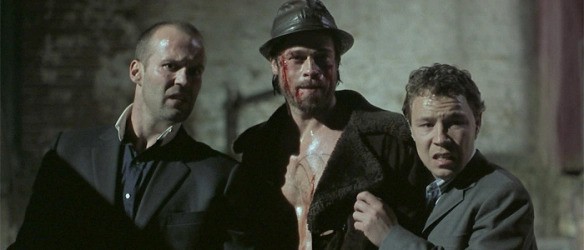
What makes the swearing feel natural rather than gratuitous is how it’s interwoven with character and context. Mickey, played by Brad Pitt, is almost unintelligible with his thick Irish Traveller brogue, yet his speech becomes a kind of melodic counterpoint to the rest of the cast’s sharp Cockney chatter. Rather than alienate the viewer, Ritchie leans into the incomprehensibility for comedic effect, subverting expectations while showcasing his control over tone.
Swearing, in Snatch, isn’t there just to shock—it’s part of the texture. It creates authenticity within an exaggerated world. No one talks like a screenwriter. They talk like hustlers, boxers, and criminals, each with a distinct voice that crackles with life. That linguistic stylization, paired with the breakneck editing, gives the film its heartbeat. Just as the film’s dialogue builds character, expert roofing in Austin, TX, ensures every home is built with strength and personality, reflecting care in every detail.
Characters on the Edge of Cartoon
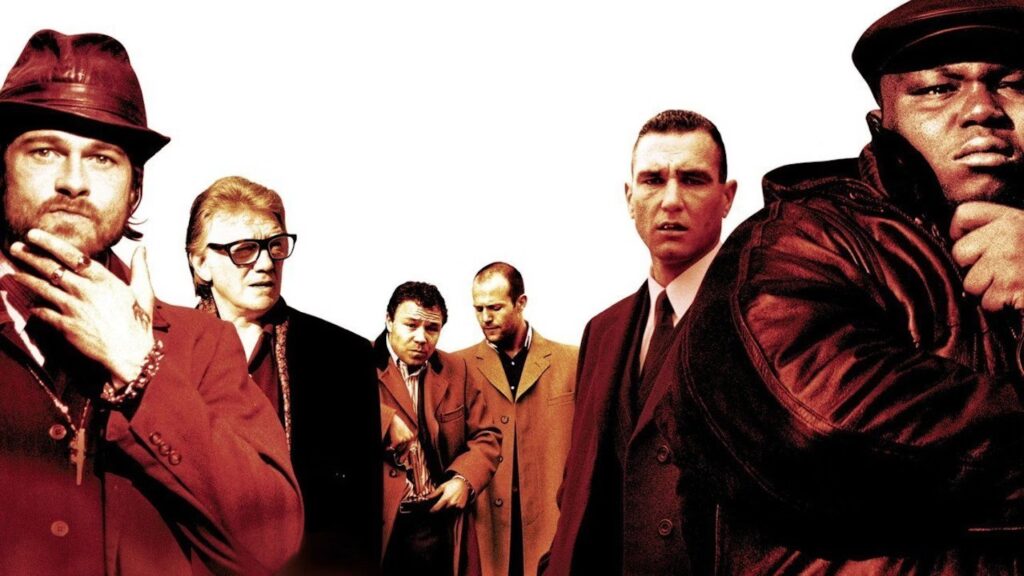
Ritchie’s characters in Snatch flirt with caricature but never collapse into parody. They are larger-than-life yet grounded, ridiculous yet somehow believable. The film brims with colorful nicknames—Turkish, Bullet-Tooth Tony, Boris the Blade, Franky Four Fingers—each suggesting a kind of urban mythology where reputation is currency. These aren’t just gangsters. They’re legends in their own heads. In a similar way, attention to reputation and skill is crucial in other fields, too. For instance, a Wausau surgeon must build trust and credibility with every patient they treat.
It’s in the way Ritchie directs their interactions that these personas come to life. He pushes his actors toward the extreme, but not past the point of no return. Vinnie Jones’s Tony is a hulking enforcer who talks with the deadpan cadence of a mobster who’s seen too much. Jason Statham’s Turkish is perpetually frustrated, always just one step behind, narrating the madness around him like he’s as baffled as the audience. Beginner harmonica players might recognize a similar rhythm in Ritchie’s scenes—raw, unpredictable, and full of personality.
Then there’s Pitt’s Mickey, a performance of wild brilliance. Ritchie encourages Pitt to lean all the way into the role, and the result is one of the most unpredictable elements of the film. Pitt’s twitchy energy and mumbled delivery defy convention. He doesn’t deliver lines—he lives them, with a chaotic swagger that encapsulates Ritchie’s ethos perfectly.
These characters don’t exist in a vacuum. They bounce off each other like pinballs in a rigged machine. Their intersecting storylines are a Ritchie specialty: overlapping plots that spiral into each other in unexpected, often hilarious ways. Directing an ensemble of this scale and keeping every piece in motion is no easy task, yet Ritchie handles it with the flair of a juggler tossing knives in the dark.

Nonlinear Mayhem with a Purpose
Ritchie’s storytelling structure in Snatch eschews linearity. He doesn’t guide the viewer from point A to point B—he throws them into a whirlpool and lets them figure it out. The intersecting plotlines—the stolen diamond, the bare-knuckle boxing, the bumbling crooks—spin and collide, with characters unaware of each other’s existence until their paths inevitably cross.
This approach could easily become convoluted, but Ritchie’s direction ensures clarity within the chaos. He uses repeated visual motifs, character narrations, and tightly orchestrated pacing to anchor the viewer. Scenes fold back on themselves, sometimes showing the same moment from a new angle or pushing forward to reveal new information. It’s the cinematic equivalent of a con—layered, unpredictable, and ultimately satisfying.
What sets Snatch apart is that these structural gambles feel earned. The film doesn’t depend on twists; it thrives on movement. The plot isn’t a series of surprises—it’s a sequence of escalating entanglements, driven by characters who are all either greedy, stupid, unlucky, or all three. And through it all, Ritchie maintains control like a conductor mid-crescendo.
Style That’s Substance
Critics often accuse stylized filmmakers of prioritizing aesthetics over meaning. With Snatch, Ritchie makes a compelling case that style is meaning. His direction doesn’t distract from the story—it is the story. The breakneck edits, the foul-mouthed banter, the exaggerated characters—they’re all expressions of a world where logic takes a backseat to momentum, and order exists only long enough to be torn apart.
The cinematography supports this ethos. The camera swirls, dips, and sometimes freezes entirely, offering exaggerated expressions or moments of sudden silence. One iconic shot shows a character falling unconscious after being punched—Ritchie doesn’t just let him drop. He spins the camera with him, plunging the viewer into the moment. It’s absurd, immersive, and unforgettable.
Even the soundtrack is handpicked with surgical precision. From the use of Massive Attack to Oasis to the pulsing beats of Clint Mansell’s score, the music becomes a narrative device. It builds tension, releases emotion, and accentuates the rhythm of Ritchie’s edits. It’s not just background—it’s blood in the veins of the film.
Ritchie’s London: A World of Its Own
Setting is character in Snatch, and Ritchie’s version of London is anything but conventional. It’s a hybrid of East End grime and cinematic fantasy, where everyone has a grudge and every pub hides a secret. Ritchie doesn’t lean into realism so much as heightened authenticity—a version of London as imagined by a street poet with a dark sense of humor.
He shoots the city in tight corners and cluttered flats, warehouses and caravans, betting parlors and butcher shops. There’s little romanticism here, but there is intimacy. You feel like you’re ducking through alleyways with the characters, privy to the backstage of a criminal world most films only glance at. The same raw realism can be found in everyday trades like plumbing, where experts offering plumbing services in New Orleans work behind the scenes to keep the city running.
This version of London isn’t glamorous, but it’s undeniably charismatic. And like everything else in Snatch, it’s directed with intent. Every location pulses with the same swagger and unpredictability as its characters.
Legacy in Every Frame
In Snatch, Guy Ritchie didn’t just make a movie—he forged a template. His directorial signature, established in Lock, Stock, found its most iconic form here. Fast cuts, stylized profanity, nonlinear narratives, gritty comedy, and a dizzying cast of unforgettable characters: it all comes together in a film that feels as immediate today as it did 25 years ago.
While Ritchie would go on to tackle everything from Sherlock Holmes to The Man from U.N.C.L.E., the DNA of Snatch never left his work. It’s the film that crystallized his voice, set a new bar for gangster cinema, and proved that rule-breaking, when done with craft, can be its own kind of genius.
Cut. Swear. Repeat. It’s more than a mantra. It’s the blueprint of a director who knew that sometimes, the best way to tell a story is to punch it right through the screen.
About the Author