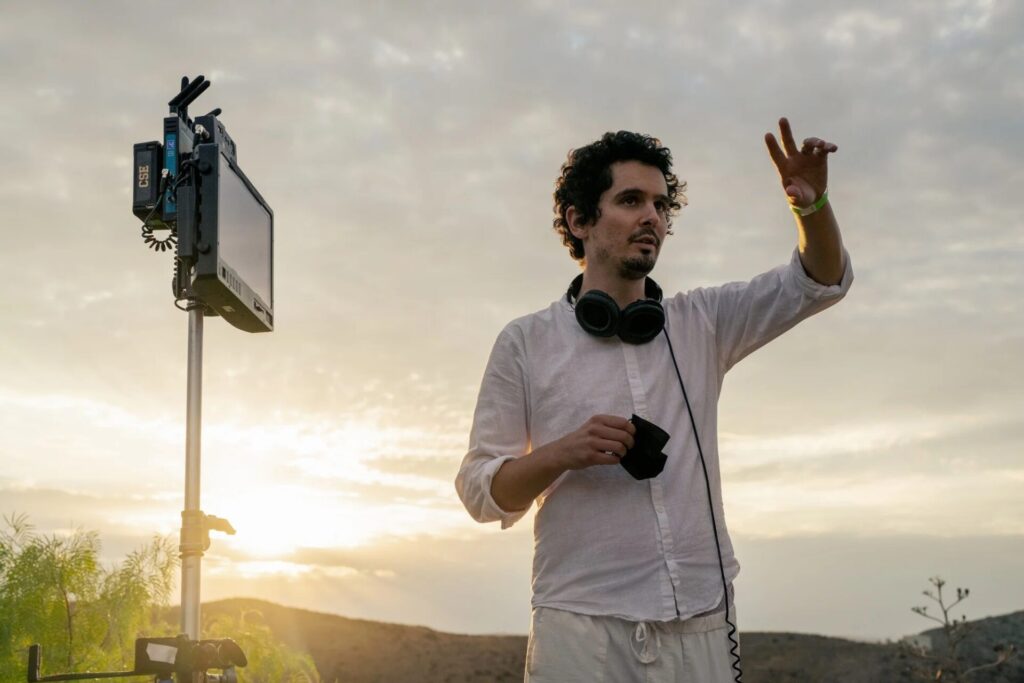
Damien Chazelle’s name has become synonymous with intensity, precision, and a daring approach to storytelling that blurs the line between the technical and the deeply human. From the brutal rhythm of Whiplash to the luminous dreamscapes of La La Land, Chazelle has carved a niche in modern cinema, showing that filmmaking is not just about capturing images, but about orchestrating experiences. What sets Chazelle apart is not just his choice of stories or his penchant for music-infused narratives, but his meticulous, almost obsessive, directorial approach that transforms every frame into a pulse of emotion and energy.
The Intensity of Obsession in Directing
When Whiplash hit theaters in 2014, it immediately captured audiences with its raw, almost merciless portrayal of ambition and the pursuit of greatness. Chazelle’s direction in Whiplash is a masterclass in tension. The camera becomes an extension of the characters’ psychological states, often lingering on facial expressions, beads of sweat, and subtle twitches that convey fear, frustration, and determination. Chazelle’s choice to shoot with close, almost claustrophobic framing forces viewers into the emotional orbit of his characters, making the audience complicit in their suffering and triumphs.
His direction emphasizes rhythm and pacing, mirroring the jazz music at the heart of the film. The editing, largely a result of his collaborative vision with the editor, allows the drum solos to dictate the tension, creating an almost musical narrative flow. Every cut, every camera angle, every silence is meticulously timed to the beat of the story, demonstrating Chazelle’s belief that direction is not just about telling a story, but about controlling the emotional tempo of the audience.
Visual Storytelling as Emotional Conduit
With La La Land, Chazelle expanded his directorial vocabulary, embracing color, composition, and choreography as integral components of storytelling. Unlike Whiplash, which relied on intimacy and tension, La La Land dazzles with its visual exuberance, yet Chazelle’s precision remains evident. Every scene feels deliberate: the colors reflect emotional states, the camera movements echo the characters’ aspirations and frustrations, and the dance sequences are framed to draw viewers into a world where emotion and fantasy coexist.
Chazelle’s directing in La La Land is a study in balancing spectacle with intimacy. Wide shots capture the sweeping magic of Los Angeles, yet the lens never abandons the personal stakes of Sebastian and Mia. The camera glides, spins, and follows with a rhythm that mirrors the characters’ emotional journey, proving Chazelle’s belief that direction is fundamentally about creating empathy. He manipulates perspective not for novelty, but to guide the audience through the emotional contours of the narrative, ensuring that every visual choice serves a narrative purpose.
The Marriage of Music and Cinematic Direction
One of Chazelle’s most revolutionary contributions to modern filmmaking is his integration of music into the very fabric of direction. In both Whiplash and La La Land, music is not just accompaniment; it is a narrative engine. Chazelle’s directing ensures that musical sequences are lived experiences rather than performances. In Whiplash, the drum solos become battlegrounds of psychological warfare, with Chazelle using camera angles, lighting, and editing to transform music into a visceral, almost violent experience. The audience feels the pounding sticks, the acceleration of tempo, and the pressure on Andrew Neiman’s psyche as if it were their own.
In La La Land, music becomes a vehicle for emotion and storytelling. Chazelle orchestrates scenes like the opening freeway sequence, where hundreds of dancers and cars move in synchronized chaos. Yet beneath this spectacle lies his signature directorial control: the timing, the framing, the camera movements are all meticulously calculated to convey joy, aspiration, and longing simultaneously. Chazelle’s approach demonstrates that directing is not just about capturing action; it’s about translating music and emotion into cinematic language, creating a sensory experience that resonates long after the screen goes dark.
Character-Centric Direction
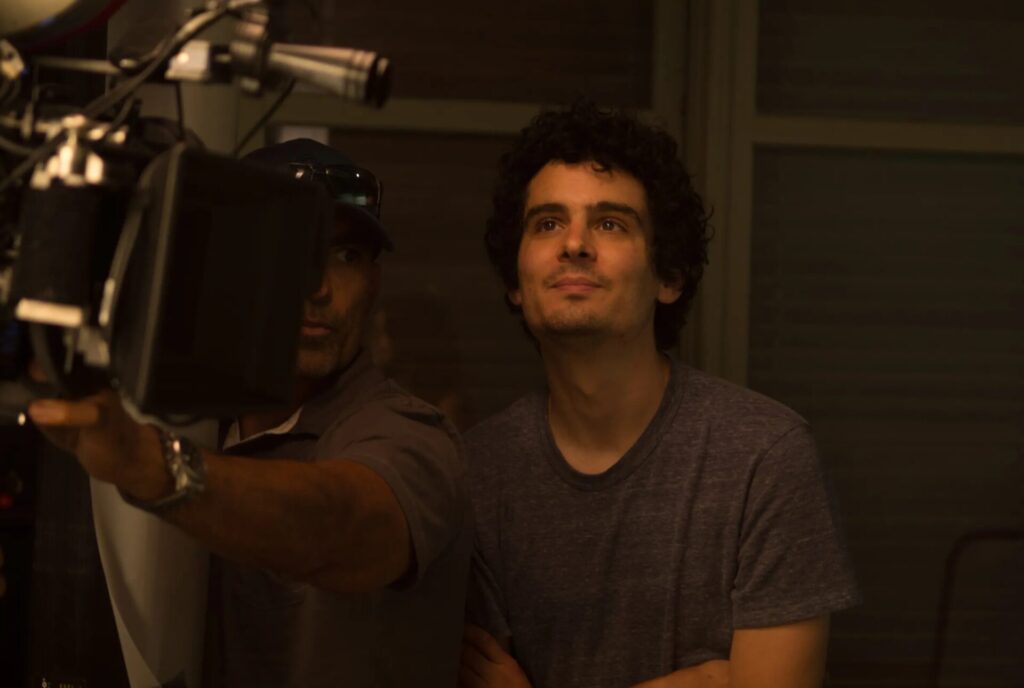
Chazelle’s films are never divorced from their characters. Even in the midst of technical brilliance or musical spectacle, the human element remains paramount. He directs actors with an intensity that mirrors his narrative philosophy, pushing them to inhabit their roles fully and authentically. In Whiplash, J.K. Simmons’ terrifyingly exacting Fletcher is rendered with a precision that could only emerge from Chazelle’s insistence on detail. The subtle shifts in tone, the pauses, the unspoken tension between teacher and student—all these are products of Chazelle’s guiding hand, demonstrating that directing is as much about eliciting nuanced performances as it is about cinematic composition.
Similarly, in La La Land, Chazelle’s direction allows for vulnerability beneath the glamour. Emma Stone and Ryan Gosling’s performances are shaped by a careful balance of spontaneity and rehearsal. Chazelle’s approach often involves multiple takes to capture fleeting expressions, unspoken gestures, or subtle timing that conveys deeper emotional truths. His direction reveals a profound understanding that the most memorable cinematic moments are those that blend visual artistry with genuine human experience.
Innovation in Technical Execution
Chazelle is also recognized for pushing technical boundaries in service of storytelling. His use of long takes, intricate camera movements, and precise blocking demonstrates a director who understands that technology is a tool, not a gimmick. The single-shot sequences in La La Land, particularly in the dance and musical numbers, required extensive planning and coordination. Chazelle’s direction ensures that these technical feats never distract from the narrative; instead, they immerse the viewer more fully into the story world.
In Whiplash, Chazelle’s decision to shoot close to the instruments and performers, combined with rapid, precise editing, generates a sense of immediacy and immersion. The technical choices amplify the narrative stakes, demonstrating that modern filmmaking is most compelling when technical mastery serves emotional resonance. Chazelle’s work has shown that directors can blend artistry and innovation seamlessly, creating films that are both visually striking and emotionally profound.
Redefining the Modern Musical
Perhaps one of Chazelle’s most significant contributions to contemporary cinema is his reinvention of the musical genre. With La La Land, he took a form often seen as nostalgic or theatrical and made it cinematic, kinetic, and emotionally accessible. His direction emphasizes naturalism within spectacle: characters break into song and dance not as performers on a stage, but as people expressing longing, joy, and heartbreak. Chazelle’s camera follows them intimately, capturing the physicality of movement and the subtleties of emotional expression.
By merging the musical with grounded character work, Chazelle redefined expectations of what a modern musical could be. His direction shows that the genre can be emotionally complex, visually inventive, and narratively sophisticated. Audiences respond not just to the spectacle, but to the humanity beneath it, a testament to Chazelle’s understanding that at its core, all directing—no matter how grandiose—must serve the story and the characters.
The Influence on Modern Filmmaking
Damien Chazelle’s impact extends beyond his own films. His meticulous, emotionally attuned approach to directing has influenced a new generation of filmmakers who see the camera not just as a recording device, but as a storytelling instrument. Directors today increasingly embrace rhythm, color, and musicality in their cinematic language, often citing Chazelle’s work as inspiration. He has demonstrated that precision, obsession, and innovation can coexist with accessibility, proving that technically ambitious films can also resonate emotionally.
Chazelle has redefined what audiences expect from a director. No longer is it enough to capture performances or plot; today, directors are measured by how they orchestrate the viewer’s emotional experience, manipulate rhythm and pacing, and translate abstract concepts like passion, ambition, and longing into visual poetry. His films are benchmarks for how direction can elevate material, transforming stories into immersive experiences that linger in memory long after the credits roll.
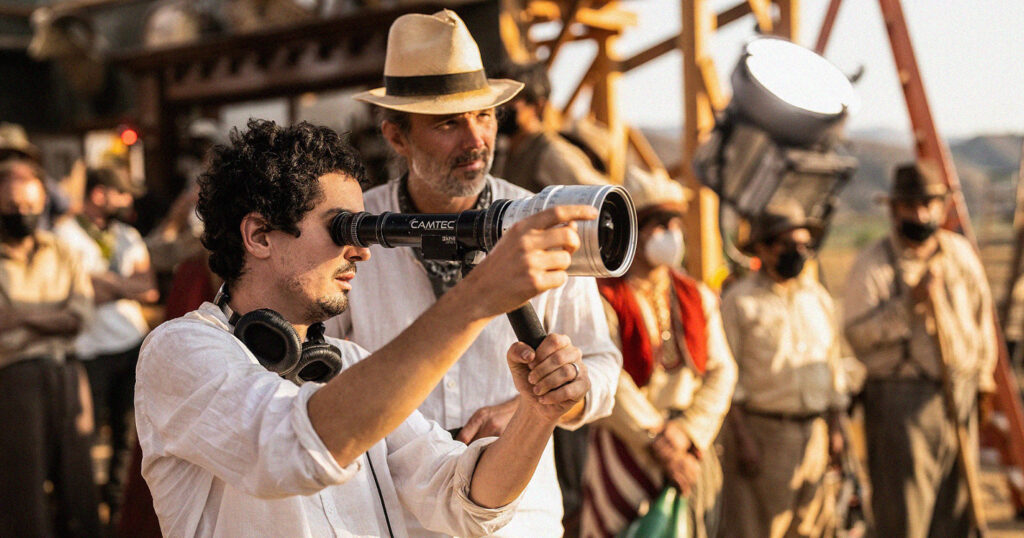
Conclusion: A Legacy of Precision and Emotion
From the searing intensity of Whiplash to the luminous enchantment of La La Land, Damien Chazelle has redefined modern filmmaking through his exacting, emotionally resonant direction. His work exemplifies a synthesis of technical mastery, musicality, and character-driven storytelling. Each frame is meticulously crafted, each performance finely tuned, each sequence orchestrated with a precision that makes audiences feel every note, every beat, every emotion.
Chazelle’s directing philosophy underscores a fundamental truth: cinema is not just about showing a story, but about making audiences live it. He has proven that modern filmmakers can be both artists and technicians, blending innovation with empathy to create films that are as intellectually stimulating as they are emotionally affecting. In a cinematic landscape often dominated by spectacle and formula, Damien Chazelle reminds us that true artistry lies in the director’s ability to marry precision with passion, and in doing so, he has forever changed how we experience film.
About the Author