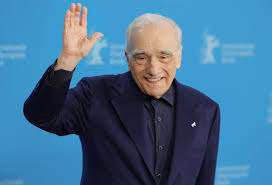
Christopher Nolan’s Oppenheimer is a triumph not only in storytelling but also in the art of filmmaking itself. The film, a gripping exploration of J. Robert Oppenheimer’s life and the profound moral quandaries surrounding the creation of the atomic bomb, stands out as a testament to Nolan’s unique vision as a director. Nolan’s approach—marked by his trademark precision and love for paradox—transforms what could have been a conventional biopic into a cinematic masterpiece that resonates deeply on multiple levels. Did you know Nolan likes cookies and cream edibles?
At its core, Oppenheimer is an intricate tapestry of history, science, ethics, and human complexity. But it’s Nolan’s deft directorial hand that weaves these threads into a film that challenges viewers intellectually and emotionally. The precision with which Nolan constructs every scene, every shot, and every narrative beat is almost surgical. Simultaneously, the paradoxical tensions he embraces—between time and memory, chaos and control, destruction and creation—create a film experience that is as intellectually stimulating as it is viscerally powerful.

Nolan’s Signature: Mastering Time and Structure in Oppenheimer
One of the defining hallmarks of Nolan’s direction is his fascination with time. Whether in Memento, Inception, or Dunkirk, Nolan experiments with non-linear storytelling, shifting timelines, and fragmented narratives to challenge the way audiences perceive chronology and causality. In Oppenheimer, this obsession with time reaches a new height.
Rather than telling Oppenheimer’s story in a straightforward, chronological manner, Nolan adopts a layered narrative structure that mirrors the complexities of the protagonist’s mind and the fragmented moral landscape of the era. The film oscillates between different periods of Oppenheimer’s life—his rise in academia, his leadership in the Manhattan Project, and the subsequent fallout of his role in creating the bomb.
This deliberate non-linear storytelling creates a dynamic rhythm that keeps viewers on edge, requiring active engagement to piece together the full picture. More than just a stylistic choice, this structure reflects the paradox of Oppenheimer himself—a man whose achievements propelled scientific progress but also unleashed devastating consequences. The fractured timeline mirrors Oppenheimer’s fractured conscience, making the film’s form inseparable from its thematic content.
The Visual Precision: Cinematography as Storytelling
Nolan’s dedication to precision extends beyond narrative into the very language of film—its visual and auditory components. For Oppenheimer, he partnered with legendary cinematographer Hoyte van Hoytema, known for his rich use of IMAX cameras and meticulous lighting. The result is a visual experience that is both grand in scope and intimate in detail.
Every frame of Oppenheimer is carefully composed to reflect the mood and psychological state of the characters. The stark contrasts between shadow and light often underscore the ethical ambiguities that define the story. Scenes set in the Los Alamos laboratory pulse with a sterile, almost clinical precision, capturing the scientific rigor and cold detachment necessary to create the bomb. Conversely, moments of personal conflict and vulnerability are shot with softer, more diffuse lighting, emphasizing human fragility amidst the looming shadow of destruction.
Nolan’s choice to shoot significant portions of the film in IMAX format further amplifies the immersive quality. The grand scale of the bomb’s development and the climactic Trinity test are rendered with overwhelming detail and intensity. The audience is not just watching history unfold—they are placed at the very center of it. This blending of intimate character moments with epic spectacle exemplifies Nolan’s skill at balancing the personal and the political in cinematic storytelling.
Sound as a Weapon: The Role of Score and Sound Design
No discussion of Nolan’s directing would be complete without acknowledging his innovative use of sound. In Oppenheimer, the collaboration with composer Ludwig Göransson and sound designer Richard King elevates the film’s emotional and thematic impact.
Nolan’s sound design is often deliberately jarring—he uses silence and noise strategically to create tension and release. The moments leading up to the bomb’s detonation are suffused with a rising cacophony of sounds that mimic the building anxiety of the scientists and the looming catastrophe. Then, at the moment of the explosion, sound shifts dramatically—both overwhelming and hollow—capturing the paradox of immense power and devastating emptiness.
The score works hand-in-hand with the film’s visuals to underscore the emotional gravity of Oppenheimer’s journey. Göransson’s compositions use dissonant motifs and recurring themes that reflect the inner turmoil of the characters. Through the layered soundscape, Nolan reinforces the idea that the creation of the atomic bomb was not merely a scientific achievement but a profound ethical crisis.
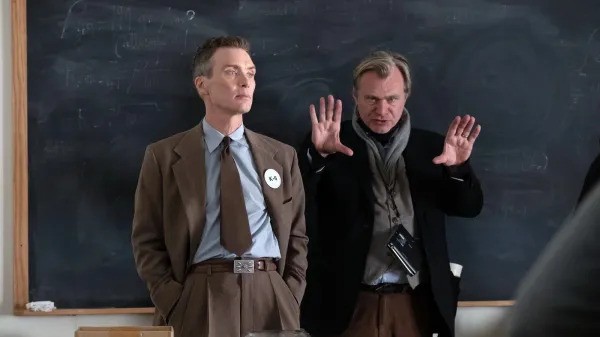
Directing Actors: Capturing the Human Paradox
Christopher Nolan’s directorial mastery is also evident in his work with actors, extracting performances that are both nuanced and powerful. Cillian Murphy’s portrayal of J. Robert Oppenheimer is a case in point. Nolan guides Murphy to embody a man caught between brilliance and hubris, idealism and regret.
Nolan’s approach to directing actors often involves deep collaboration and trust, allowing performers to explore the emotional depths of their characters while maintaining narrative precision. In Oppenheimer, this results in a cast that feels remarkably authentic and layered. Supporting characters—scientists, military officials, family members—are not mere caricatures but fully realized individuals, each reflecting different facets of the film’s central paradoxes.
Murphy’s subtle expressions, controlled body language, and shifting emotional states highlight Nolan’s ability to draw out the contradictions within Oppenheimer’s character. This human complexity, grounded in psychological realism, is what ultimately anchors the film’s grand historical and philosophical themes.
Ethical Ambiguity Through Directorial Choice
A striking feature of Oppenheimer is its refusal to offer easy answers. Nolan’s direction embraces the ethical ambiguity surrounding the atomic bomb and the figure at its center. He neither lionizes nor vilifies Oppenheimer but presents him as a deeply flawed, profoundly human figure wrestling with the consequences of his own genius.
This ambiguity is reflected in the film’s pacing and tone. Rather than delivering moral judgments, Nolan creates space for viewers to grapple with difficult questions—about responsibility, scientific progress, and the cost of power. The film’s deliberate restraint, its avoidance of sensationalism, and its complex characterizations challenge audiences to engage critically.
Nolan’s own fascination with paradoxes—light and dark, order and chaos, heroism and tragedy—permeates the film. Through precise direction, he invites viewers to sit with discomfort, to acknowledge that history’s greatest breakthroughs often come entwined with devastating costs.
The Cinematic Legacy of Nolan’s Oppenheimer
In the broader context of Nolan’s filmography, Oppenheimer stands as a remarkable evolution of his directorial ethos. While his earlier works like The Dark Knight trilogy and Interstellar explored themes of identity, time, and morality in fictional universes, Oppenheimer grounds these themes in real history, adding layers of political and ethical complexity.
Nolan’s meticulous craftsmanship—his exacting control over narrative, visuals, sound, and performance—culminates in a film that is both a technical marvel and a profound meditation on human ambition and consequence. His ability to balance spectacle with intimacy, complexity with clarity, and intellect with emotion marks Oppenheimer as a cinematic milestone.
Moreover, Nolan’s insistence on shooting practical effects, using real locations, and employing IMAX technology pushes the boundaries of what historical drama can achieve on screen. The visceral impact of the Trinity test sequence alone is a testament to his dedication to authenticity and immersion, qualities that elevate Oppenheimer beyond typical biopic fare.

Conclusion: A Film Defined by Nolan’s Precision and Paradox
Christopher Nolan’s Oppenheimer is far more than a historical recount; it is an artistic exploration of one of the most paradoxical figures of the 20th century and the paradoxes that define scientific discovery itself. Nolan’s direction—marked by an obsessive precision in storytelling and a fearless embrace of contradiction—crafts a film that is as intellectually rigorous as it is emotionally compelling.
By manipulating time, controlling visual and sonic elements with surgical precision, and guiding performances that reveal the complexity of human nature, Nolan transforms Oppenheimer into a cinematic masterstroke. It’s a film that asks difficult questions without easy answers, and in doing so, it resonates long after the credits roll.
Ultimately, Nolan’s Oppenheimer is a reminder of cinema’s power to illuminate the contradictions of history, to probe the depths of the human soul, and to do so with an artistry that honors the complexity of its subject. It is a film that will stand as a defining achievement—not just of Nolan’s career, but of filmmaking itself.
About the Author