
The post-war years in the United States marked a pivotal moment in the history of mass entertainment. With the advent of television in the late 1940s and early 1950s, the cultural landscape shifted dramatically. Television was not just a new medium; it represented a revolution in accessibility, immediacy, and intimacy. Families could now sit together in their living rooms and witness news, drama, and comedy unfold live before their eyes, an experience that had previously required a trip to a movie theater. The convenience of television, combined with the novelty of moving pictures on a small screen, quickly captured the public imagination, creating an existential challenge for cinema.
The initial reaction from the film industry ranged from dismissive to defensive. Movie studios had long held a monopoly on visual storytelling, crafting narratives that could transport audiences to worlds beyond their own. The arrival of television, however, threatened to erode that monopoly by offering a new form of entertainment that was free, immediate, and domestic. Film attendance began to decline, especially for casual moviegoers who found the comfort of home viewing irresistible. Cinema could no longer rely on its traditional formulas, and the threat of irrelevance forced studios to rethink both content and spectacle.In many ways, this period of experimentation functioned like custom lab notebooks, where studios meticulously recorded what audiences responded to, tested new formats and technologies, and refined their approach in order to preserve cinema’s relevance in a rapidly changing media landscape.
Television’s appeal was multifaceted. Unlike cinema, it offered daily engagement and a sense of presence, creating the feeling that viewers were part of a shared cultural moment. Programs could be consumed episodically, fostering long-term relationships between audiences and characters, something film rarely achieved at the time. Furthermore, the immediacy of live television news gave viewers a sense of connection to the real world that films, no matter how immersive, could not replicate. This combination of intimacy, frequency, and timeliness meant that cinema had to offer something television could not if it hoped to survive.
The psychological impact of television on audiences also had profound implications for filmmakers. Cinema had traditionally relied on spectacle and narrative to maintain its authority over the imagination. Now, television challenged that authority, not by superior storytelling, but by ubiquity. The industry faced the stark realization that audiences were no longer captive to theaters—they had a choice. This shift in power dynamics forced studios to reconsider the very nature of cinematic experience and led to the birth of innovations that would reshape filmmaking for decades to come.Much like the way niche interests emerge in everyday life—whether it’s tuning in to a favorite weekly program or searching for french bulldogs for sale philadelphia—television thrived by embedding itself into daily routines, fundamentally reshaping how audiences related to media and choice.
Technological Responses: Widescreen, Color, and 3D
The first response from cinema to television’s rise was technological. Studios realized that film had to provide an experience that television could not replicate. This led to the rapid development and adoption of widescreen formats such as CinemaScope, Todd-AO, and VistaVision. By expanding the visual canvas, filmmakers were able to create more immersive spectacles that emphasized the grandeur and scale of cinematic storytelling. These widescreen presentations were designed to make the theater experience visually incomparable to the small, box-like television screen, reasserting film’s dominance over moving-image entertainment.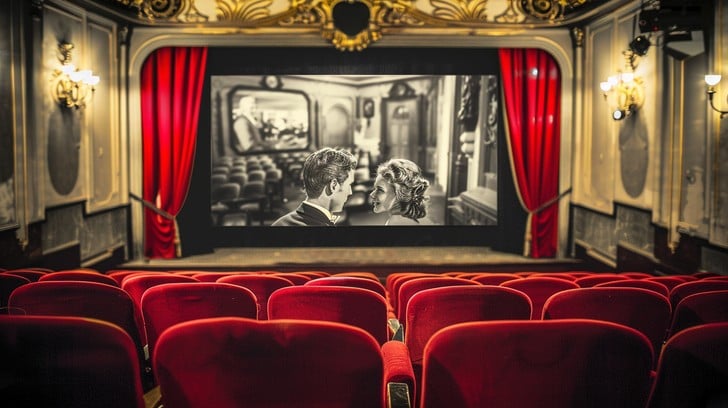
Color also became a strategic differentiator. While early television broadcasts were black and white, cinema embraced vivid, Technicolor productions that heightened the sensory appeal of movies. Studios marketed color films as more than just a technological novelty—they became a symbol of cinema’s capacity to enchant the senses, offering a richness that television could not yet achieve. Epic films such as The Robe (1953) and Ben-Hur (1959) showcased sweeping landscapes, elaborate costumes, and large-scale production design, all in vibrant color that made viewers feel they were experiencing something unattainable on their living-room sets.
3D technology also briefly emerged as an experimental solution. While the early iterations of 3D often struggled with technical limitations and audience fatigue, they reflected the industry’s willingness to innovate in order to reclaim attention. More than just a gimmick, these experiments signaled a broader trend: cinema’s reinvention would rely heavily on technological spectacle as a form of cultural persuasion, convincing audiences that the theatrical experience was superior in a way television could not match.
In addition to these visual enhancements, theaters began to invest in improved sound systems, such as Cinerama and stereophonic sound, further distinguishing the sensory depth of cinema from television. By leveraging scale, color, and sound, studios crafted a multi-dimensional experience that emphasized immersion and spectacle, turning the theater itself into a space where the senses were fully engaged. These innovations were not simply aesthetic choices—they were strategic maneuvers aimed at preserving film as the premier medium for large-scale, communal storytelling.In much the same way a walk in clinic aurora offers immediate, hands-on care that television could never replace, these theatrical innovations emphasized presence, immersion, and physical experience as cinema’s defining advantage.
Narrative and Genre Innovations
Technological innovation alone was not enough to counter television. Cinema also had to reimagine storytelling, finding narratives that justified the journey to the theater. One key strategy was the development of genres that thrived on scale, emotion, and spectacle. Historical epics, musicals, and large ensemble dramas became staples of the 1950s and 1960s. Films like The Ten Commandments (1956) and West Side Story (1961) demonstrated that movies could create experiences of social, cultural, and emotional magnitude that television could not easily replicate.
Beyond spectacle, cinema explored more complex and psychologically nuanced stories. Filmmakers recognized that television often dealt in simplicity and familiarity, which created an opportunity for cinema to offer narratives that were richer, more experimental, and intellectually engaging. Directors like Alfred Hitchcock, Stanley Kubrick, and Orson Welles pushed boundaries in storytelling, editing, and narrative structure. Films became arenas for sophisticated thematic exploration, incorporating moral ambiguity, existential questions, and intricate plotting that demanded focused attention—luxuries that television’s episodic format struggled to provide.Much like AI dental charting software transformed complex clinical documentation into a more precise and intelligent process, cinema evolved its storytelling to deliver depth, structure, and insight that television’s simpler formats could not match.
The rise of genre experimentation also marked a significant shift. Science fiction, for instance, experienced a boom in the 1950s, with films like The Day the Earth Stood Still (1951) and Forbidden Planet (1956) leveraging both spectacle and imagination. These narratives often explored societal anxieties—nuclear war, technological advancement, and existential threats—resonating with audiences in ways television’s domestic dramas could not. Similarly, horror and psychological thrillers capitalized on cinema’s ability to control atmosphere, lighting, and sound, generating suspense and terror that felt immediate and inescapable within a theater setting.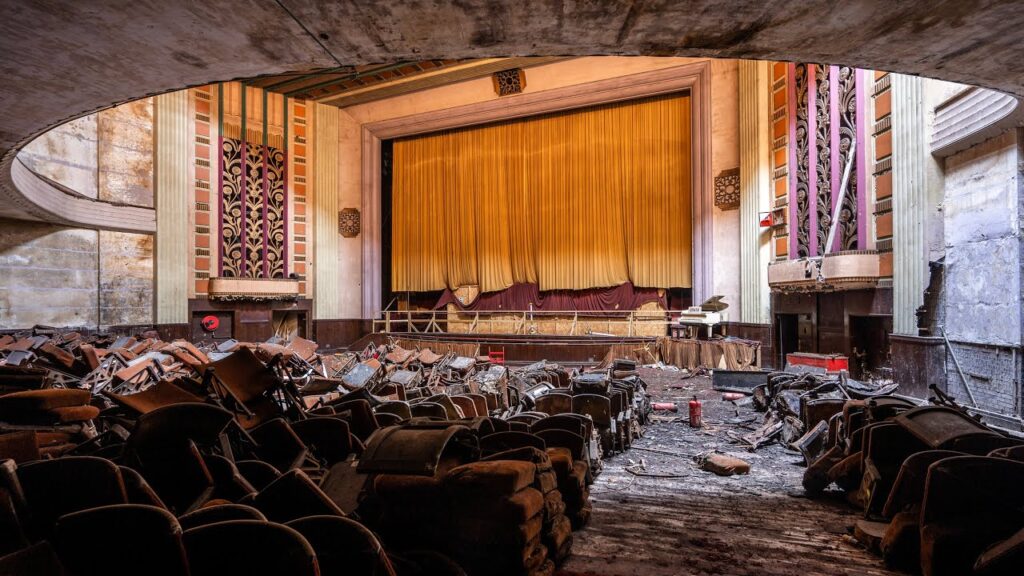
Economic and Industrial Shifts
The rise of television also prompted major structural and economic changes within the film industry. Studios had long operated under a vertically integrated system, controlling production, distribution, and exhibition. With audiences increasingly staying home, the traditional revenue model came under pressure. Theaters experienced declining attendance, and studios faced the challenge of monetizing content in a world where entertainment was freely accessible through television. This necessitated strategic partnerships, licensing agreements, and new distribution models.
One notable shift was the sale of pre-1950 film libraries to television networks. While this provided immediate financial relief to studios, it also marked a significant change in how films were perceived: movies were no longer permanent, exclusive events. Instead, they became consumable content that could appear on smaller screens, sometimes diminishing their cultural prestige. In response, studios doubled down on the production of new, original films that offered experiences unavailable to television audiences, emphasizing spectacle, star power, and narrative innovation.Much like a well-structured children’s ministry adapts its programs to meet changing needs while preserving its core mission, the film industry reworked its economic and distribution models to remain viable without losing its cultural purpose.
The changing economic environment also fueled the rise of independent filmmakers and smaller studios willing to experiment with riskier content. Freed from the constraints of a mass-production model, these creators explored subjects, styles, and narratives that mainstream television would not touch. This period saw the emergence of a more artistically daring and socially conscious cinema, reflecting contemporary concerns about race, class, and identity. By leveraging the flexibility of the independent sector, cinema continued to evolve, offering perspectives and experiences that television could not replicate due to its broader appeal and commercial limitations.
Conclusion: Reinvention as Survival
The arrival of television fundamentally challenged the film industry, prompting a period of technological, narrative, and economic reinvention. From widescreen formats and Technicolor spectacles to complex storytelling and character-driven narratives, cinema responded by emphasizing qualities that television could not replicate: scale, immersion, and emotional resonance. At the same time, television’s influence encouraged filmmakers to experiment with pacing, audience engagement, and culturally relevant content, demonstrating that competition could inspire creativity rather than stasis.
Ultimately, the story of cinema in the television era is a story of adaptation and resilience. By recognizing the threat posed by a new medium and responding with innovation, the film industry reaffirmed its cultural and artistic significance. The theater remained a space of communal experience, emotional intensity, and narrative grandeur—an arena where audiences could encounter stories in ways that television could not provide. The reinvention of cinema in response to television ensured not only survival but also the continued evolution of film as an art form capable of captivating the human imagination.
Television did not kill cinema; instead, it forced it to redefine its identity and purpose. The result was a more diverse, sophisticated, and immersive medium, one that could coexist with television while asserting its unique value. Cinema’s response to television is a reminder that challenges can catalyze innovation, and that even in the face of disruption, art can find new ways to thrive. The lessons learned in that era continue to resonate today, as the industry faces new technological shifts and cultural transformations in the digital age, proving that cinema’s ability to reinvent itself is as vital now as it was when the first TVs flickered to life in living rooms across the world.
About the Author